Saturday, April 18, 2009

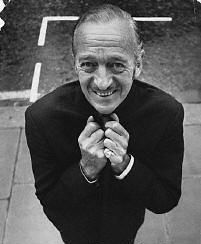
Charles Laughton


Charles Laughton (1 July 1899 – 15 December 1962) was an English Academy Award-winning stage and film actor, screenwriter, producer and two-time director.
While best known for his historical roles in films, he started his career as a remarkable stage actor. During a time when many serious stage actors despised the motion picture medium, seeing it only as a source of income, Laughton showed keen and serious interest in the pioneering possibilities of film, and later other media, such as radio, recordings, and TV, proving that quality work could be made available to audiences other than theatre-goers. He became an American citizen in 1950.


Laughton was born in Scarborough, Yorkshire, England, the son of Robert Laughton by his wife Elizabeth (née Conlon). His mother was a devout Catholic and he attended Stonyhurst College, a Jesuit school, in Lancashire, England. He served during World War I (in which he was gassed) first with the 2/1st Battalion of the Huntingdonshire Cyclist Regiment and later with the 7th Battalion of the Northamptonshire Regiment.
He started work in the family hotel business, while participating in amateur theatricals in Scarborough. Finally allowed by his family to become a drama student at RADA in 1925, Laughton made his first professional stage appearance on April 28, 1926 at the Barnes Theatre, as Osip in the comedy The Government Inspector, in which he also appeared at the London Gaiety Theatre in May. Despite not having the looks for a romantic lead, he impressed audiences with his talent and played classical roles in two plays by Chekov, The Cherry Orchard and The Three Sisters. He played the title role in Arnold Bennett's Mr Prohack (Elsa Lanchester was also in the cast), Agatha Christie's Hercule Poirot in Alibi, the title role in Mr Pickwick after Charles Dickens, Tony Perelli in Edgar Wallace's On the Spot and William Marble in Payment Deferred. He took this last play across the Atlantic and in it he made his debut in the USA on September 24, 1931, at the Lyceum Theatre (New York). He returned to London for the 1933-34 Old Vic Season and was engaged in four Shakespeare roles (as Macbeth and Henry VIII, Angelo in Measure for Measure and Prospero in The Tempest). In 1936 he went to Paris and on May 9 appeared at the Comedie Francaise as Sganarelle in the second act of Moliere's Le Medecin malgré lui, the first English actor to appear at that theatre, where he acted the part in French and received an ovation.

Laughton commenced his film career in England while still acting on the London stage. He took small roles in three short silent comedies starring his wife Elsa Lanchester, Daydreams, Blue Bottles and The Tonic (all 1928) which had been specially written for her by H. G. Wells. He made a brief appearance as a disgruntled diner in another silent film Piccadilly with Anna May Wong in 1929. He appeared with Elsa Lanchester again in a "film revue," featuring assorted British variety acts, called Comets (1930) in which they duetted in 'The Ballad of Frankie and Johnnie', and made two other early British talkies: Wolves with Dorothy Gish (1930) from a play set in a whaling camp in the frozen north, and Down River (1931) in which he played a murderous, half-oriental drug-smuggler.

His New York stage debut in 1931 immediately led to film offers and Laughton's first Hollywood film was The Old Dark House (1932) with Boris Karloff in which he played a bluff Yorkshire businessman marooned during a storm with other travellers in a creepy mansion in the Welsh mountains. He then played a demented submarine commander in The Devil and the Deep with Tallulah Bankhead, Gary Cooper and Cary Grant and followed this with his best-remembered film role of that year as Nero in Cecil B. DeMille's The Sign of the Cross.
He also turned out a number of other memorable performances during that first Hollywood trip, repeating his stage role as a murderer in Payment Deferred, playing H. G. Wells's mad vivisectionist Dr. Moreau in Island of Lost Souls, and the meek raspberry-blowing clerk in the brief segment of If I Had a Million that was directed by Ernst Lubitsch.
His association with film director Alexander Korda began in 1933 with The Private Life of Henry VIII (loosely based on the life of King Henry VIII of England), for which Laughton won an Academy Award. However, he continued to act occasionally in the theatre, and his American production of Life of Galileo by (and with) Bertolt Brecht is legendary.

Laughton returned to Hollywood where his next film was White Woman (1933) in which he co-starred with Carole Lombard as a cockney river trader in the Malaysian jungle. Then came The Barretts of Wimpole Street (1934) as Norma Shearer's malevolent father; Les Misérables (1935) as Javert, the police inspector; Mutiny on the Bounty (1935) as Captain Bligh, one of his most famous screen roles, co-starring with Clark Gable as Fletcher Christian; and Ruggles of Red Gap (1935) as the very English butler transported to early 1900s America.
Back in England, and again with Alexander Korda, he played the title role in Rembrandt (1936). In 1937, also for Korda, he starred in an ill-fated film version of the classic novel, I, Claudius, by Robert Graves, which was abandoned during filming owing to the injuries suffered by co-star Merle Oberon in a car crash. (Out-takes from this film provided the material for a remarkable BBC TV documentary in 1965 entitled "The Epic That Never Was," narrated by Dirk Bogarde.)
After I, Claudius, he and the ex-patriate German film producer Erich Pommer founded the production company Mayflower Pictures in the UK, which produced three films starring Laughton: Vessel of Wrath (1938), based on a story by W. Somerset Maugham, in which Laughton's wife Elsa Lanchester co-starred; Sidewalks of London, a story about London street entertainers that also featured Vivien Leigh and Rex Harrison; and Jamaica Inn, with Maureen O'Hara and Robert Newton, based on a novel about Cornish smugglers by Daphne du Maurier, and the last film Alfred Hitchcock directed in Britain before moving to Hollywood in the late 1930s. The films produced were not successful enough, and the company was saved from bankruptcy when RKO Pictures offered Laughton the title role of Quasimodo in The Hunchback of Notre Dame (1939). Laughton and Pommer had plans to make further films, but the outbreak of World War II, which implied the loss of many foreign markets, meant the end of the company.


Laughton's film roles in the 1930s were among his finest and consisted almost entirely of the costume and historical drama parts for which he is best remembered (Nero, Henry VIII, Mr. Barrett, Captain Bligh, Rembrandt, Quasimodo and others). In his modern-dress film roles in his 1940s movies his acting style often led to variable results, particularly in a number of roles for which he was not ideally cast. He played an Italian vineyard owner in California in They Knew What They Wanted (1940); a South Seas patriarch in The Tuttles of Tahiti (1942); an American admiral in Stand by for Action (1942); a butler in Forever and a Day (1943); and an Australian bar-owner in The Man from Down Under (1943).
Still, some of these post-thirties performances could be remarkable when he came across a good script or a perceptive director, such is the case of a cowardly school-master in occupied France in This Land is Mine (1943), by Jean Renoir, in which he engaged himself most actively,in fact, while Renoir was still working in an early script, Laughton would talk to him about Alphonse Daudet's story "The Last Lesson", which suggested to Renoir a relevant scene of the film. He gave also an interesting portrait of a henpecked husband who eventually murders his wife in The Suspect (1944), directed by Robert Siodmak, who would become a good friend of Laughton. He played sympathetically an impoverished composer-pianist in Tales of Manhattan, and managed to transmit the eagerness of a little man who suddenly gets his only big chance to have success. He would also star in an up-dated version of Oscar Wilde's The Canterville Ghost (1944), and in spite of Wilde's original flavour being mangled in order to turn the story in a piece of wartime propaganda, he was able to recover irony and weary melancholia of the character as Wilde originally devised him.


Apart from these, he would enjoy his work in two comedies he made with Deanna Durbin, It Started with Eve (1941) and Because of Him (1946). He also seemed to enjoy himself both as a blood-thirsty pirate in Captain Kidd (1945) and as a malevolent judge in Alfred Hitchcock's The Paradine Case (1948). Laughton was on top form again as a megalomaniac press tycoon in The Big Clock (1948).


He had supporting roles as a Nazi in pre-war Paris in Arch of Triumph (1948); as a bishop in The Girl from Manhattan (1948); as a seedy go-between in The Bribe (1949); and a kindly widower in The Blue Veil (1951). He played a Bible-reading pastor in the multi-story A Miracle Can Happen (1947) but his sequence was deleted and replaced with another featuring Dorothy Lamour, and in this form the film was re-titled On Our Merry Way. However, an original print of A Miracle Can Happen was sent abroad for dubbing before the Laughton sequence was deleted and in this form it was shown in Spain under the title Una Encuesta Llamada Milagro.
Laughton made his first colour film in Paris as Inspector Maigret in The Man on the Eiffel Tower (1949) and hammed it up enormously alongside Boris Karloff as a mad French nobleman in a version of Robert Louis Stevenson's The Strange Door in 1951. He was a tramp in O. Henry's Full House (1952) in which he had a one-minute scene with Marilyn Monroe. He became a pirate again, buffoon-style this time, in Abbott and Costello Meet Captain Kidd (1952). He guest-starred in an episode of the Colgate Comedy Hour on TV which also featured Abbot and Costello and was notable for his delivery of the Gettysburg Address. He played Herod Antipas in Salome (1953, with Rita Hayworth in the title role) and repeated his role as Henry VIII in Young Bess (1953). He returned to England to star in Hobson's Choice (1954) directed by David Lean.
Laughton received Academy Award and Golden Globe nominations for his role as Sir Wilfrid Robarts in the screen version of Agatha Christie's play Witness for the Prosecution (1957).


He played a British admiral in Under Ten Flags (1960) and worked for the only time with Laurence Olivier, in Spartacus (1960) as a wily Roman senator.


His final film was Advise and Consent (1962), for which he received favorable comments for his performance as a southern U.S. Senator (for which accent he studied recordings of the late Mississippi Senator John Stennis). Laughton worked on the film, which was directed by Otto Preminger, while he was dying from bone cancer.


The Night of the Hunter

Laughton took a stab at directing a movie, and the result was The Night of the Hunter (1955), starring Robert Mitchum, Shelley Winters and Lillian Gish. This movie is often cited among today's critics as one of the best movies of the 1950s., and has been selected by the United States National Film Preservation Board for preservation in the Library of Congress. Unfortunately, at the time it was originally released it was a critical and box-office failure, and Laughton never had another chance to direct a film. He did not appear in the film, but worked solely as a director. The documentary Charles Laughton Directs The Night of the Hunter by Robert Gitt (2002) features preserved rushes and outtakes with Laughton's audible off-camera direction.


He had a long and resilient marriage to actress Elsa Lanchester, although, in her autobiography, Lanchester revealed that Laughton was gay. According to her own account, she was shocked to learn about this, but eventually decided to remain married to him. However, she claims as a result of this, she decided not to have children with him. The decision caused him great grief, as he longed to become a father, as many friends of Laughton, among them Maureen O'Hara and Stanley Cortez.

His wife Elsa Lanchester appeared opposite him in several films, including Rembrandt (1936) and The Big Clock (1948). They both received Academy Award nominations for their performances in Witness for the Prosecution (1957) - Laughton for Best Actor, and Lanchester for Best Supporting Actress - but neither won.


Friday, April 17, 2009

The Ruling Class (1972)


The Ruling Class is a 1972 British comedy film, an adaptation of Peter Barnes' satirical stage play which tells the story of a paranoid schizophrenic British nobleman (played by Peter O'Toole) who inherits a peerage. The film costars Alastair Sim, William Mervyn, Coral Browne, Harry Andrews, Carolyn Seymour, James Villiers and Arthur Lowe. It was produced by Jules Buck and directed by Peter Medak. Peter O'Toole described the movie as "a comedy with tragic relief".


Jack Gurney, the 14th Earl of Gurney (O'Toole), at first he thinks he is God and shocks his family and friends with his talk of returning to the world to bring it love and charity, not to mention his penchant for breaking out into song and dance routines and sleeping upright on a cross. When faced with unpalatable facts (such as his identity as the 14th Earl), Jack puts them in his "galvanized pressure cooker" and they disappear. His unscrupulous uncle, Sir Charles (Merwyn), marries him to his own mistress, Grace (Seymour), in hopes of producing an heir and putting his nephew in an institution; the plan fails when Grace actually falls in love with Gurney.
Gurney gains another ally in Sir Charles' wife (Browne), who hates her husband and befriends Gurney just to spite him. She also begins sleeping with Gurney's psychiatrist, Dr. Herder (Michael Bryant), to persuade him to cure Gurney quickly.
Herder attempts to cure him through intensive psychotherapy, but this is to no avail; Gurney so thoroughly believes that he is the "God of Love" that, ironically, he dismisses any suggestion to the contrary as the rambling of lunatics. The night his wife goes into labour with their child, Herder makes one last effort at therapy; he introduces Gurney to McKyle (Nigel Green), a patient who also believes himself to be Christ, or, as the patient puts it, "The Electric Messiah", who subjects an unwitting Gurney to electroshock therapy. The plan is to use the electroshock to (literally) jolt Gurney out of his delusions, showing him that the two men could not both be God, and so he must be operating under hallucinations. The plan works, and, as Grace delivers a healthy baby boy, Gurney returns to his senses and reclaims his true identity, proclaiming "I'm Jack, I'm Jack".
Sir Charles, still intent on stealing the title, sends for a court psychiatrist to evaluate Gurney, confident that his nephew would be sent to an asylum for life. He is once again thwarted, however, when the psychiatrist discovers that Gurney was a fellow Old Etonian, bonds with him, and declares him sane.
Gurney soon relapses into mental illness, however, this time believing himself to be Jack the Ripper. Now a violent psychopath with a puritanical hatred of women, Gurney murders Sir Charles' wife in a fit of enraged revulsion when the aging woman tries to seduce him. He frames the Communist family butler, Tucker (Lowe), for the murder, and assumes his place in the House of Lords with a fiery speech in favor of capital and corporal punishment. Ironically, the speech is wildly applauded, and the lords have no idea that it is the ranting of a madman, in contrast to society's reaction when Gurney believed he was Christ. That night, he murders Grace for expressing her love for him.
The story's ending is ambiguous; it is left open to interpretation whether Gurney gets caught, or escapes detection to kill again.


The play was adapted by Peter Barnes from his play with few major changes. It cost around $1.4 million, with O'Toole working for free (he was instead paid a great deal for the big budget Man of La Mancha, released by the same studio later the same year). It was filmed at a sprawling estate in Harlaxton with the interiors reconstructed on sound stages.
It was the official British entry at the Cannes Film Festival in 1972, but divided critics. The New York Times described it as "fantastic fun" and Variety called it "brilliantly caustic", but the Los Angeles Times called it "snail-slow, shrill and gesticulating" and Newsweek said it was a "sledgehammer satire". Despite mixed critical reaction to the film, O'Toole's performance was universally praised and garnered numerous pretigious awards and prizes, including an Academy Award nomination for Best Actor. Reportedly, when United Artists, its North American distributor, told producer Jules Buck that it would be cutting the film extensively for US release, Buck punched the company's London representative and bought the film back. Avco Embassy then bought distribution rights and cut its 154-minute running time by six minutes.
In 1974, following an earlier-than-normal TV screening of the film on BBC TV, which broke a gentlemen's agreement allowing a 'window' of theatrical distribution before any TV screening, the UK's Cinematograph Exhibitors' Association (the theatrical distributors' association) recommended its members black all future movies produced by Jules Buck.

The Lion in Winter (1968)

The Lion in Winter is a 1968 historical costume drama made by Avco Embassy Pictures, based on the Broadway play by James Goldman. It was directed by Anthony Harvey and produced by Joseph E. Levine from Goldman's adaptation of his own play. 


The Lion in Winter is set during Christmas 1183, at Henry Plantagenet's château and primary residence in Chinon, Anjou, within the Angevin Empire of medieval France. Henry wants his son Prince John (1166-1216, the future King John of England 1199-1216) to inherit his throne, while his wife Queen Eleanor of Aquitaine (whom he keeps locked in Salisbury Tower) wants their son Prince Richard the Lionheart (1157-1199, the future King Richard I of England 1189-1199). Meanwhile, King Philip II of France, the son of Eleanor's ex-husband, has given his half-sister Alais, who is currently Henry's mistress, to the future heir, and demands either the wedding or the return of her dowry.
As a ruse, Henry agrees to give Alais to Richard and make him heir. He makes a side deal with Eleanor for her freedom in return for Aquitaine, to be given to John. The deal is revealed at the wedding, making Richard refuse to go through with the ceremony. Eleanor, having lost again, masochistically asks Henry to kiss Alais in front of her, and then looks on in horror as they perform a mock marriage ceremony. Having believed Henry's intentions, John, at the direction of his other brother Prince Geoffrey, Duke of Brittany (1158-1186), plots with Philip to make war on England. Henry finds out, dismisses all three sons as unsuitable, and locks them in the dungeon. He makes plans to travel to Rome for an annulment, so that he can have new sons with Alais, but she says he will never be able to release his sons from prison or they will threaten the new sons. Henry sees that she is right and condemns them to death, but cannot actually put them to death and lets them escape. He and Eleanor go back to hoping for the future.
The Lion in Winter is fictional: there was no Christmas Court at Chinon in 1183; there was a Christmas court at Caen in 1182; none of the dialogue and action is historic, though the outcomes of the characters and the background are historically accurate. In reality, Henry had many mistresses and many illegitimate children; the "Rosamund" mentioned in the film was Henry II's mistress until she died. The article on the Revolt of 1173-1174 describes the historical events leading to the play's events.


The film was shot at Ardmore Studios in Bray, County Wicklow, Ireland and on location in Ireland, Wales, and in France at Abbaye de Montmajour, Arles, Château de Tarascon, Tarascon, and Tavasson, Saône-et-Loire.
An interesting aspect of the film was that Hepburn was 61 years old and thus the same age that her character Eleanor of Aquitaine was in 1183, the film's plot year.
Hepburn won an Academy Award for Best Actress for her role. The musical score by John Barry also won an Oscar, as did Goldman's adaptation of his play.

Thursday, April 16, 2009

My Favorite Year (1982)


My Favorite Year is a 1982 comedy film which tells the story of a young comedy writer. It stars Peter O'Toole, Mark Linn-Baker, Jessica Harper, Joseph Bologna, Lou Jacobi, Bill Macy, Lainie Kazan, Selma Diamond, Cameron Mitchell and Gloria Stuart. O'Toole was nominated for the Academy Award for Best Actor. The film was adapted into the unsuccessful 1992 Broadway musical of the same name.


Benjy Stone (Mark Linn-Baker), the narrator, tells of the summer he met his idol. In the early days of television, Benjy works as a junior comedy writer for a variety show starring Stan 'King' Kaiser (Joseph Bologna). As a special upcoming guest, they get the famous (though washed up) movie star Alan Swann (Peter O'Toole). However, when he shows up, they realize that he is a roaring drunk. Kaiser is ready to dump him -- until Benjy intervenes and promises to keep him sober during the week leading up to the show.
As Benjy watches out for Alan (or at least tries to keep up with him), they learn a lot about each other -- including the fact that they both have family they try to hide from the rest of the world. In Benjy's case, it's his Jewish mother (Lainie Kazan), who is married to a Filipino former bantamweight boxer, Rookie Carroca (Ramon Sison), and Benjy's embarrassing relatives, such as uncouth Uncle Morty (Lou Jacobi). For Alan, it is his young daughter Tess, who has been raised entirely by her mother, one of his many ex-wives. He stays away, but admires her from afar and continues to secretly keep tabs on her.
Meanwhile, Kaiser is threatened by corrupt union boss Karl Rojeck (Cameron Mitchell), who doesn't appreciate being parodied on the show. "Accidents" start happening during rehearsals when Kaiser refuses to stop performing the 'Boss Hijack' sketches.
In a subplot, Benjy tries, clumsily and overenthusiastically, to win the affections of co-worker K. C. Downing (Jessica Harper). Swann advises him on the right approach to take with her.
On show night, Alan suffers a panic attack when he realizes that millions of people will be watching him live (he's used to working with a small crew and getting many takes to get his lines right, crying -- with a line which brought the house down when O'Toole appeared and showed a clip on The Tonight Show -- "I'm not an actor, I'm a movie star!"). Alan gets drunk, but is confronted by Benjy, who angrily tells him that despite his faults, Benjy always thought of him as the swashbuckling hero he saw on the big screen. As Benjy puts it when convincing Swann that he has the necessary courage inside him somewhere, "Nobody's that good an actor!"
At that point, Rojeck's men show up and start beating Kaiser up during the live broadcast of the show (with the audience thinking that it is part of the comedy sketch). Swann grabs a rope and swings into action (dressed as a Musketeer for a later skit), saving Kaiser in front of an appreciative, if still clueless audience.
Benjy narrates the end of the film, describing that Swann, his confidence bolstered, finally gets up the nerve to visit his daughter the next day. Alan stands in front of the still applauding audience, taking a bow.


Mel Brooks, executive producer of the film, was a writer for the Sid Caesar variety program Your Show of Shows, early in his career. Movie swashbuckler Errol Flynn was a guest on one episode, and this real-life occurrence inspired a largely fictional screenplay. Swann was obviously based on Flynn, while Benjy Stone is loosely based on both Brooks and Woody Allen, who also wrote for Caesar. According to Mel Brooks the character Rookie Carroca was based on a real person - a Filipino sailor in the U. S. Navy who was his neighbor in Brooklyn. King Kaiser, like Alan Brady on The Dick van Dyke Show represented Sid Caesar ("Kaiser" is the German equivalent of the Roman title Caesar). Selma Diamond, another former writer for Your Show of Shows (she inspired the Sally Rogers character, played by Rose Marie on The Dick Van Dyke Show), appears in the movie.
Other writers from Your Show of Shows had already made their own use of their experiences. The comic play Laughter on the 23rd Floor by Neil Simon included thinly disguised versions of Sid Caesar and his staff, as did The Dick Van Dyke Show, which was created by Brooks' friend and colleague Carl Reiner.
Mel Brooks acknowledges that most of the movie's plot was fabricated. He says that Errol Flynn's appearance on Your Show of Shows was uneventful, that none of the writers got much of a chance to talk to Flynn, let alone become his friend or take him home to dinner.
In the episode of 'The Simpsons', "The Latest Gun In the West", former Western star Buck McCoy's drunken appearance on "The Krusty The Clown Show" is reminiscent of a scene in the film.

The American Film Theatre

Back in 1973, producer Ely Landau launched this daring and unprecedented cinema series that played in the U.S. for two “seasons,” with a total of fourteen titles (but only thirteen were shown), all renowned works—classic and modern—originally produced on the stage. Landau and his wife Edie were not Broadway producers, but they were Theatre People and had helped launch the “Play of the Week” series on PBS television, produced Sidney Lumet’s film version of Eugene O’Neill’s Long Day’s Journey Into Night (1962), and were keen on inventing a way to make Broadway (or the London stage) accessible to everyone in America—at their local movie theater. 

This was the unique and exciting experiment called the American Film Theatre.

There have always been stage plays adapted for film—A Streetcar Named Desire, for example, or The Miracle Worker, or Hamlet. But plays like these were “re-imagined” for the film medium—the script was often changed or re-written with added or deleted scenes, the action was “opened up” to include locations outside of a single, claustrophobic stage set, and the roles were usually re-cast with “Hollywood actors” rather than “Broadway actors.” Then there were also the few stage productions that were filmed as is, i.e., cameras were set up in front of an actual proscenium stage while an already-rehearsed play was performed and the cameras simply recorded the production. Waiting for Godot (1961), for example, was done this way for television. 

The American Film Theatre concept tried something different. The directive was to take a great stage play, not change a word, and in most cases, use the actual play script as the screenplay. The next step was to hire an accomplished film director to interpret the text for the film medium but stay faithful to the play. Sometimes the director was the same person who helmed the original stage production. A further step was to persuade the original casts from the Broadway or London productions of those plays to star in the film; or, when that wasn’t possible, to cast big-name Hollywood or British actors. Thus, the result was indeed a filmed play—but you as an audience member wouldn’t be watching it from the middle of the orchestra or from the side or from the first balcony; instead you were up close and personal in a realistically-presented world (on studio sets and/or real interior or exterior locations)—just like in “regular” movies. You had the best seat in the house, so to speak, but there’s no proscenium arch. It’s a movie. But it’s a play. Get it? 

Landau didn’t have a lot of money to produce the series. Getting the rights to the plays was the easy part. In most cases, if the playwright was still living, he was more than happy to take a modest fee to see his play translated faithfully to the screen. Edward Albee, for example, had already gone through a Hollywood experience with Who’s Afraid of Virginia Woolf? During that production, he and producer/screenwriter Ernest Lehman often clashed over the script until Lehman finally gave in and used Albee’s original play text as the film script almost verbatim (and yet Lehman was credited for the screenplay and received an Oscar nomination for it!). So, when Landau approached Albee about doing A Delicate Balance in the American Film Theatre with promises that the actual play would be the screenplay, and Albee would have director and cast approval, the playwright jumped at the chance. Landau collected the rights to the plays he wanted in this manner and started from scratch with every production, except for two. Three Sisters, from the Anton Chekhov play and directed by Laurence Olivier, had already been produced and released in Britain only in 1970. Philadelphia, Here I Come!, from the Brian Friel play and directed by John Quested, was an Irish production set to be released in 1975. Landau bought the U.S. distribution rights for both films and presented them as two of the entries in the AFT program. Thus, Three Sisters and Philadelphia, Here I Come! were the only pictures in the entire two seasons that Landau and his team did not produce. 

The talent (directors, actors, designers, technicians) was asked to work at a reduced rate or at scale. No one refused. It was for a cause they all thought was worthwhile. Lee Marvin, for example, joked that he “lost $225,000” by starring in The Iceman Cometh (which meant he did the movie for only $25,000—his going rate at the time was $250,000). 

Grants from American Express and other organizations helped fill out the rest of the production costs. Finally, audiences were asked to subscribe in advance to a certain number of films in a particular season. They could buy tickets for the entire season or a lesser selection if they desired. Only four performances per film were shown at selective theaters around the country—simultaneously—and a new film premiered every month. Just like theatre, only in the cinema. 

Beginning in October 1973, one picture played each month through May 1974. The second season consisted of six features (only five were actually shown) and ran in 1975. 

Following the run of the second season, the films disappeared from public viewing (except for The Man in the Glass Booth). They were all re-issued theatrically in selected markets about a year later. Some time after that they were run on HBO. Then, after the new millennium, the excellent video company Kino International Inc. released the entire series on DVD. All fourteen features are now available in a deluxe box set that is worth every penny of its retail price, despite the fact that none of the films were digitally restored. (See www.kino.com for information on how to buy this set, as well as other great film classics.)


As with any cinema series, some entries are better than others. Here is an assessment of each American Film Theatre picture with a rating based on a 5-star system. 

The Iceman Cometh by Eugene O’Neill (October 1973)

Directed by John Frankenheimer; Starring Lee Marvin, Fredric March, Robert Ryan, Jeff Bridges, Bradford Dillman, Moses Gunn.


What a cast! The premiere AFT feature presented one of the better acting ensembles of the series. It’s a tough movie to watch, though—the play is terribly depressing and long (O’Neill was known for his epic works). It’s a four-hour movie, with two intermissions, and the action takes place entirely inside a dark, gloomy Irish bar in 1912 New York. It’s a world of lost souls and hopeless drunks, and we get to know each character intimately. Lee Marvin plays Hickey, the traveling salesman whose imminent visit everyone looks forward to. Hickey is always the life of the party, buying drinks for all and leading everyone on a binge. But this time Hickey arrives sober and spends the play trying to convert his friends into going on the wagon. While Marvin has the showy role and is quite good, it is Robert Ryan, as Larry Slade (the play’s true protagonist) who is the heart and soul of the film. Ryan gives the performance of his career and it’s a shame it was ineligible for Academy recognition. Fredric March is also excellent (both March and Ryan died shortly after the film’s completion—this was their final film). Young Jeff Bridges is winning and the rest of the character-role ensemble is magnificent. Yes, it’s long. It’s a struggle at times. But in the end, you feel as if you’ve made a significant journey to hell and back. 5 stars. 

The Homecoming by Harold Pinter (November 1973)

Directed by Peter Hall; Starring Paul Rogers, Ian Holm, Vivien Merchant, Cyril Cusack, Terence Rigby, Michael Jayston. 


For my money, this feature is the most successful entry in the entire AFT series. Pinter is terribly difficult to pull off, and luckily Landau managed to get the original London cast and director for this production. Pinter’s plays have been called “theatre of menace” and this, his Tony-winning, best-known work, is the quintessential example. The story is about the ultimate British dysfunctional family—a crotchety old patriarch (Rogers), his wimpy brother (Cusack), his two hateful sons (Holm, Jayston), and the prodigal son (Rigby) who unexpectedly comes home for a visit with a new wife (Merchant). After a series of creepy—but hilarious—scenes, the family decides they will all share the new wife. The cast is excellent, especially Rogers and a young Ian Holm, who was one of Pinter’s longtime stage interpreters. This is black comedy—very black—at its finest. If you’ve never seen a Pinter play, this is a must-see. One of the best films of 1973, in or outside of the American Film Theatre! 5 stars. 

A Delicate Balance by Edward Albee (December 1973)

Directed by Tony Richardson; Starring Katharine Hepburn, Paul Scofield, Kate Reid, Lee Remick, Joseph Cotten, Betsy Blair.


Albee seems to love dysfunctional families, too. This is a story of upper-class WASPs with all kinds of problems—mostly alcoholism affecting at least two members of the clan—and a surprise visit from their “best friends” who are suffering from some kind of mysterious, inexplicable terror. The friends want to move in and stay permanently. Albee’s Pulitzer Prize winning play is a powerful drama with excellent character studies. Again, the acting is superb—where else are you going to see Hepburn, Scofield, Cotten, Blair, Remick, and Reid all in the same room busting each other’s chops? But while the production is a good one, it’s not great. The pacing is slow and the setting indeed seems surprisingly more static than the bar in Iceman Cometh. Richardson could have pushed for a little more dynamics in the tempo and rhythms of the play, and then it would have been even more of a class act. Still, it’s worthwhile. 3 stars. 

Rhinoceros by Eugene Ionesco (January 1974)

Directed by Tom O’Horgan; Starring Zero Mostel, Gene Wilder, Karen Black.


Rhinoceros is an archetypal example of the so-called “theatre of the absurd” movement on the stage in the 50s and 60s. The problem with adapting it to the screen is that these types of plays are specifically theatrical in nature. They depend on allegory, symbolism, metaphor, and surrealism that cannot be accomplished in a realistic presentation. O’Horgan, the man who directed Hair on Broadway, valiantly attempts to place this very surrealistic play into a modern, naturalistic city setting. It doesn’t work. The story: people all around an alcoholic Everyman (Wilder) are inexplicably turning into rhinoceroses. Of course, this is an allegory for Communism/Fascism. What makes the film moderately amusing and watchable are, again, the performances by Mostel (who originated the role of John/Jean on Broadway) and Wilder. They are such a pleasure to watch. Unfortunately O’Horgan has inserted a pop-song soundtrack (composed by Hair’s Gerome Ragni) and the thing just feels like it’s trying too hard to be “hip.” 2 stars. 

Luther by John Osborne (February 1974)

Directed by Guy Green; Starring Stacy Keach, Julian Glover, Leonard Rossiter, Patrick Magee, Judi Dench, Maurice Denham, Hugh Griffith, Robert Stephens.


Osborne, the author of Look Back in Anger, wrote this poetic treatment of the life of Martin Luther, the man who “invented” Protestantism. The play is episodic, covering many years of Luther’s life from the time in which he was a confused and doubting monk to the point when he is put on trial by the Catholic bishops and excommunicated. It is an engaging, well-acted production. Keach is marvelous in the lead role, and the other fine British actors such as Magee and Denham, especially, are top-notch. A young Judi Dench has a small role toward the end as a nun-turned-Luther’s wife. Green’s direction is remarkably faithful in translating the stage transitions as indicated in the original playscript to the screen medium. One of the better entries in the series. 4 stars. 

Three Sisters by Anton Chekhov (March 1974)

Directed by Laurence Olivier; Starring The Royal National Theatre Company (including Joan Plowright, Jeanne Watts, Louise Purnell, Derek Jacobi, Laurence Olivier, Sheila Reid, Ronald Pickup) and Alan Bates.


As mentioned above, Three Sisters was a film already produced and released in Britain in 1970, and therefore was not made by Ely Landau and the AFT. The film is a recreation of the National Theatre’s highly successful and critically-acclaimed 1969 production of the play, so it is much more “stagey” than any of the other films in the AFT series. (Bates was not a member of the company, hence he received separate billing.) Even as a Theatre Person, I will forever wonder why Chekhov’s plays are considered “comedies,” for they are usually dry, light dramas about middle-class Russian families in crises involving relationships and careers. While this production may have been very absorbing on stage, on film it is, frankly, a bit stuffy. Nevertheless, the cast is excellent and it’s probably the closest thing to a dead-on, faithful rendition of Chekhov on the screen that you’ll ever see. Unfortunately, the DVD has some sound issues—the dialogue sounds as if it was recorded in a barrel—but this could also be a symptom of the original film’s mix. 3 stars. 

Butley by Simon Gray (April 1974)

Directed by Harold Pinter; Starring Alan Bates, Jessica Tandy, Richard O’Callaghan, Michael Byrne, Susan Engel.


It seems when Pinter is involved in an AFT production, it turns out very well. Butley is one of the best entries in the series, mainly due to the tour-de-force performance by Alan Bates in the title role as an alcoholic, razor-witted schoolteacher who is left by his wife and his male lover on the same day. If there was ever any doubt that Bates was one of the greatest actors of the 20th Century, then Butley is the film to see. The actor dominates the production in every frame. Even though he plays a despicable cad, his charisma and exuberance is infectious. If the film had been allowed to compete at that year’s Oscars, Bates surely would have been a contender. Pinter made his directorial debut with the picture and it exhibits confidence and style. One of the best films of 1974, in or outside of the AFT. 5 stars. 

Lost in the Stars by Maxwell Anderson and Kurt Weill (May 1974)

Directed by Daniel Mann; Starring Brock Peters, Melba Moore, Paul Rogers, Clifton Davis, Raymond St. Jacques.

This is one of two musicals produced by the AFT, and it’s a surprisingly good one. Anderson adapted the original stage show from Alan Paton’s novel Cry, the Beloved Country (book and lyrics), while Weill provided the music. The story concerns a poor black preacher’s search for his missing son in apartheid South Africa, only to find that the young man has been arrested for the murder of a white man. The son goes on trial and is sentenced to hang. The preacher’s faith in God and humanity is shaken. End of story. A nice, cheery subject matter for a musical. Regardless of the downer storyline, there is a lot of heart in the material. The nearly all-black cast does a splendid job, especially with the singing. Unlike the other AFT productions, this one was filmed on location in Jamaica (doubling as South Africa) with many exterior settings. It’s a refreshing change from the rest of the series. Not spectacular, but worth watching. 3 stars. 

Galileo by Bertolt Brecht (January 1975)

Directed by Joseph Losey; Starring Topol, Edward Fox, Tom Conti, Michael Lonsdale, Judy Parfitt, John Gielgud, Patrick Magee, John McEnery, Colin Blakely, Mary Larkin, Richard O’Callaghan.


Tricky business, attempting to film Brecht. After all, the playwright invented a theatrical language all his own (known as “epic theatre”) in which the medium made no attempts to hide the fact that audiences were indeed watching a theatrical production—more akin to Greek drama than most 20th Century theatre. Characters often broke the fourth wall of the proscenium arch to address the audience directly and “comment” on the action. Music and songs were used, often as narration, delivered by characters or a Chorus. Director Losey staged the first American production of Galileo, so he was the perfect choice to adapt it to the screen (the play was adapted from German by Charles Laughton in the 1940s and worked with Brecht himself for that production). Losey actually succeeds in re-creating the Brechtian theatrical conventions for the screen—a Chorus of three young boys sing narration directly to the camera, Galileo often addresses the audience, and sometimes stage rigging can be seen in the set pieces—and yet, this is a movie—and a very good one. Starring such renowned actors as Topol (in the title role) and a host of British stage superstars, it’s the fascinating story of the scientist’s clash with the Catholic Church preceding the Age of Reason. On first release, the film was positively received except for the casting of Topol, whose performance supposedly didn’t fit in with the rest of the production. I disagree—he’s marvelous, and the supporting cast is all superb. It’s not a perfect film, but it’s a darned good one—certainly an admirable representation of Brecht and his work. 4 stars. 

Jacques Brel is Alive and Well and Living in Paris by Jacques Brel, Eric Blau, Mort Shuman (February 1975)

Directed by Denis Heroux; Starring Elly Stone, Mort Shuman, Joe Masiell, Jacques Brel.

The original musical was a very popular Off-Broadway extravaganza from the late sixties that was really a plot-less revue/concert of the songs of Belgian Jacques Brel (translated into English by Shuman and Blau). On stage, it was a delightful potpourri of musical vignettes performed entirely by four actor/singers. This does not translate well to the film medium. Heroux stages the songs in surreal, music-video-style shorts that call more attention to the pretentiousness of the concept than it does the music. While the performers are fine (especially Brel himself in a “cameo” number), the production tries too hard to be imaginatively trendy, when all it really succeeds in is unintentional silliness. Luckily, director Heroux fared much better in later years as a producer (Atlantic City, Quest for Fire). If you like the songs you may enjoy the film, otherwise it’s a curiosity. 1 star. 

In Celebration by David Storey (March 1975)

Directed by Lindsay Anderson; Starring Alan Bates, Brian Cox, James Bolam, Bill Owen, Constance Chapman.

A story about yet another dysfunctional British family, this one takes place in Yorkshire as three grown sons return home to celebrate their parents’ 40th wedding anniversary. But apparently there are long-squelched secrets that need to bubble to the surface, so what starts out as an uneasy reunion turns ugly. Bates (again) is superb as the eldest (and trouble-making) son, but it is Cox who is strikingly charismatic as the silent, youngest young man on the verge of a breakdown. And then there’s the unseen, ever-present specter of the son who died at age seven. The film imported the cast directly from the original Royal Court Theatre production. One of the better entries; compelling and poignant. 4 stars. 

The Maids by Jean Genet (April 1975)

Directed by Christopher Miles; Starring Glenda Jackson, Susannah York, Vivien Merchant.

One has to understand a little about Genet the man in order to appreciate his plays. He had a decidedly kinky world outlook, and this is very clear when one knows that his original intention for The Maids was that it be performed by an all-male cast in drag (it almost never is). The story concerns two sisters who are maids to a wealthy socialite. When Madame is away, the sisters role-play sadomasochistic scenarios in which one of them portrays Madame and the other enacts one of the sisters. They never seem to get to finish the fantasy—in which Madame is supposed to be murdered—before they are interrupted by the real Madame’s return. The three actresses are superb in this faithful adaptation of their London stage production. Audiences unfamiliar with the source material, however, will find it very strange and unsettling (as it should be). Not for everyone, but it’s a challenging and intelligent piece of work. 3 stars. 

The Man in the Glass Booth by Robert Shaw (May 1975)

Directed by Arthur Hiller; Starring Maximilian Schell, Lawrence Pressman, Lois Nettleton, Luther Adler.


You won’t see playwright/actor Robert Shaw’s name anywhere in the credits of this film adaptation of his play because—in a departure from the AFT’s directive—the text was changed in many places to allow for a more cinematic experience…and Shaw was unhappy about it and had his name removed. However, director Hiller reports in an interview (a DVD extra) that when Shaw saw the film prior to its premiere, he was extremely pleased and asked that his name be reinstated, but it was too late! Nevertheless, the film is a riveting, first-rate drama featuring an Oscar-nominated, tour-de-force performance by Schell. The story, loosely inspired by the abduction and trial of Nazi war criminal Adolf Eichmann, concerns a wealthy Jew in New York City who is captured by an Israeli commando team and flown to Israel to stand trial as a concentration camp commander. Is the Jew really the Nazi colonel, or is he impersonating him because in truth he’s just a guilt-ridden Holocaust survivor? The surprise ending caps the American Film Theatre series with one of its best entries. 5 stars. 

Philadelphia, Here I Come! by Brian Friel 

Directed by John Quested; w/ Donal McCann, Des Cave, Siobhan McKenna, Eamon Kelly, Fidelma Murphy, David Kelly.

(Note: This film was not shown during the original run of the subscription series for reasons unknown. It was, however, released with the other thirteen pictures when they were re-issued as regular theatrical releases and on home video.) The second film that was purchased “pre-packaged” by Landau and the AFT, this Irish drama-comedy concerns a young man named Gar and his reflections on his life as he prepares to leave his small town in Ireland and emigrate to America. The theatrical conceit here is that Gar is played by two different actors—his “public” self (McCann) whom everyone sees and hears, and his “private” self (Cave), who is present to no one but the real Gar and serves as the young man’s conscience, pointing out the brutal truth in everything. It’s a small story with a big heart. Fine performances all around, especially from the rarely seen Siobhan McKenna as Gar’s housekeeper. Not a stand-out in the series, but certainly not a bad one. 3 stars.

The American Film Theatre could probably never be repeated, especially within the economic structure that exists in the motion picture industry today. It’s a shame, for even though the AFT was not a perfect product, it was a bold and fascinating experiment that attempted to blend the stage with cinema. It’s the kind of project that reminds us how recklessly courageous—and often artistically brilliant—filmmakers could be in the 1970s.

Wednesday, April 15, 2009

Benny & Joon (1993)

Benny & Joon is a 1993 romantic comedy about how two misfits, Sam (Johnny Depp) and Juniper/Joon (Mary Stuart Masterson), find each other and fall in love. 


In a small town, an auto mechanic named Benny is devoted to taking care of his mentally ill sister, Joon, who can barely function alone in the real world despite being a talented artist. This relatively stable situation is shaken up when Benny is obliged in a poker game to welcome another player's relative, Sam, to his home for a few days. When Sam arrives, he quickly makes an impression with his quietly eccentric ways which emulate the antics of the great silent movie comedian, Buster Keaton. Without Benny's full knowledge, Sam and Joon find themselves drawn to each other to the fullest degree.


The movie is full of absurdist fripperies we're meant to find magically funny; mostly they're just cute (Sam cooking up grilled cheese sandwiches with an iron, a poker game in which a snorkel mask and baseball tickets are used as stakes). Beneath the domesticated surrealism, though, Benny & Joon becomes genuinely touching-a love story about separation anxiety. Benny, the saintly grease monkey, thinks he has to devote his life to Joon in order to keep her out of an institution. Can he give her the space she needs to fall in love (and then take said space for himself)? You already know the answer, but Quinn and Masterson-now gentle, now sniping-let it play out with tender conviction. Though hemmed in by the sentimental conception of her role, Masterson, in one or two scenes, comes close to making mental instability seem like a state of grace. And Quinn has the charisma of goodness: His bright, aw- shucks smile is as honest as Jimmy Stewart's. Inconsequential as it is, Benny & Joon is that rare thing, a crazy-versus-sane movie that likes one kind as much as the other. 

Pride and Prejudice and Zombies


Pride and Prejudice and Zombies features the original text of Jane Austen’s beloved novel with all-new scenes of bone-crunching zombie action. As our story opens, a mysterious plague has fallen upon the quiet English village of Meryton—and the dead are returning to life! Feisty heroine Elizabeth Bennet is determined to wipe out the zombie menace, but she’s soon distracted by the arrival of the haughty and arrogant Mr. Darcy. What ensues is a delightful comedy of manners with plenty of civilized sparring between the two young lovers—and even more violent sparring on the blood-soaked battlefield as Elizabeth wages war against hordes of flesh-eating undead. Complete with 20 illustrations in the style of C. E. Brock (the original illustrator of Pride and Prejudice), this insanely funny expanded edition will introduce Jane Austen’s classic novel to new legions of fans.

Monday, April 13, 2009

The Decorator (1965)

The Decorator is a Bette Davis TV pilot produced by Aaron Spelling in 1965.
It was to star Davis as a diva decorator, with Mary Wickes as her girl Friday.
The pilot never aired.


Sexy Beast (2000)

Sexy Beast is a 2000 British film directed by Jonathan Glazer, starring Ray Winstone, Ben Kingsley and Ian McShane. Produced by Jeremy Thomas, it was Glazer's debut feature film. He had previously been a director of music videos, such as Rabbit in Your Headlights for British electronica group UNKLE, and commercials for companies such as Guinness and Levi.
The film earned Kingsley an Oscar nomination for Best Supporting Actor. In 2004 the magazine Total Film named Sexy Beast the 15th greatest British film of all time.
The film is rated 18 by the BBFC for Very Strong Language, Strong Bloody Violence, Strong Sex and Sex References.


Ex-con and expert safe-cracker Gary "Gal" Dove has served his time behind bars and blissfully retired to a Spanish villa with his beloved wife Deedee. He also has the company of longtime friend Aitch and his wife Jackie. Their idyll is shattered, however, by the arrival of an old criminal associate, the sociopathic Don Logan, who is intent on enlisting Gal in a bank heist back in London.
Dove politely but firmly refuses Logan's many requests to join the heist, but Logan will not back down. After revealing a lingering infatuation with Jackie, he makes several unwelcome attempts at reconnecting with her. Logan eventually grows violent, hurling torrents of abuse at the group while at the same time spitefully painting himself as a victim of their infidelity. After finally storming away in a rage, Logan is kicked off his plane and returns to Dove's home with the intention of murdering him. Instead, Deedee surprises him with a shotgun. The entire group combines their efforts, first beating and shooting him, and finally crushing his skull.
With Logan dead, Dove is forced to return to London to perform the job as if nothing has happened. Teddy Bass, a powerful crimelord, has organised the heist after learning about the bank from Harry, a banker who had sex with him at an orgy. Dove feigns ignorance over Logan's whereabouts, but Bass is immediately suspicious. Dove now fears both getting arrested by the police and being murdered by Bass. Since Logan's arrival, Dove's anxiety has manifested in strange dreams where he is menaced by a humanoid rabbit, which echoes a disastrous hunting trip earlier in the film.
During the heist, Bass' gangsters use surface-supplied diving gear and drill into Harry's bank vault from a pool in a neighboring bath house. The water from the pool floods the vault and shorts its security system. While helping to empty the vault's safe deposit boxes, Dove secretly pockets a pair of large diamond earrings. After the job is successfully completed, Bass forces Dove to accompany him to kill Harry. Though Bass has realised the truth about Logan's murder, he does not care enough to retaliate by killing Dove. Instead, he forces Dove to forfeit his share of the loot and banishes him from London.
Dove returns safely home and his paradise is restored. Deedee wears the diamond earrings that he stole, and it is revealed that Logan is buried under the double-heart insignia at the bottom of their pool, which had been damaged by a falling boulder just prior to his arrival.


Strange Frame: Love & Sax ( November 2009)

Its the 29th century. We're on Ganymede, one of Jupiters moons. The human race has long since left a decimated Earth. To survive the harsh climates of other planets and moons, humans have genetically modified themselves making skin color and sexual organs a common matter of fashion.

Two beautiful musicians, Parker, a soulful saxophonist, and Naia, an impish guitarist, play center stage. They move almost as one, a seamless harmony developed over the years from the bonding and sharing in their struggle to get just this far in their careers.

Unfortunately, fame is about to tear them apart.

This is the last gig they will ever play together.


Strange Frame is a labor of love between two old friends musician Shelley Doty and filmmaker GB Hajim. It began in 1999 when they decided to collaborate on a project using their individual talents and their passion for science fiction especially that of John Varley and Shinichiro Watanabe.
In the Fall of 2004, pre-production began. GB had an offer to produce the film overseas, but was committed to enriching life in his local community. GB lives in East Hawaii which is one of the most economically depressed parts of the State. He went to the local high schools and colleges to find talented youth to train for this project. From a pool of applicants, he trained 14 artists ages ranging from 13 to 23 in computer art and animation. They recorded the initial dialog at Palm Records on the island just a month before the sound engineer and owner, Charles Brotman, won a Grammy Award.
Part of the decision to go with cutout style instead of CG was one of creating a sustainable industry in East Hawaii. CG is being done all over the globe. Most productions do their animation work in Asia. By working in a medium that is fringe and hard to reproduce, "strange frame" has lead to a production pipeline that cannot be found anywhere else.
In 2005, pre-production was completed and the animation of the feature began. Each semester high school students join the team through the Hui'ana Mentorship Program sponsored by the Hawaii State Department of Education. Over 40 interns have trained at the small shack that holds the production facility. GB continues to reach out to the different schools around the state to find talent that would otherwise leave for the mainland or, worse, not find a home for their abilities.


Cast include Jason Scott Lee as the voice of Atem and Lena Horne in an archive footage as Ethel Andrews, the character she performed in 1938's "The Duke Is Tops" 


London Fields - Martin Amis


Like Prince before him, Martin Amis of the 80's was thinking about 1999. His 1989 novel London Fields opens up on London a decade in the future, paralyzed by fear of the coming apocalypse. Such dread is something that we can recognize, nineteen years later. After all, we have lived through the turn-the-calendar-and-the-world-ends hysteria of Y2K and the anxious atmosphere surrounding the late fall of 2001, when the old world seems really to have passed away. Amis has a knack for slipping details into his books--which are filled to the bursting point with details--which seem relatively inconsequential at first mention but will become vital to the plot. His doomsday is no different: Somewhere around page 200, the reader begins to wonder what all this business with the health problems of the President's wife and the vague environmental catastrophe of "dead clouds" is really doing in the narrative if Amis isn't going to explain it, and then, around page 400, boom. The world actually begins into implode.

But what Amis calls the "big thing" is essentially shoved into the background for the book's length. "The little thing," the thing which interests us, is the story of Nicola Six, a calculating sexpot who is attempting to engineer her own death by murder. Our narrator identifies the murderer as one Keith Talent, a West London lowlife cobbled together from the grotesqueries of British tabloids, a part-time cheat and full-time serial adulterer whose greatest ambition is to become a darts champion. Nicola is fascinating in her way, but she is too inhumanly precise to attract any sympathy; it is Keith who is the greatest creation of London Fields: His multicultural stable of women, his persistent obsession with the strategies of darts (there are few), his awkward cockney brutishness. The third player in Nicola's game is Guy Clinch (A Dickensian name if there ever was one), a dull and restless man whose defining characteristic is his wealth. It is Nicola's attempt, it seems, to play the two off of each other, until one-and of course, not the one we are supposed to expect--has the means and the motive to off her.

Of course, as the narrator tells us, "...a cross has four points. Not three." The fourth point is the narrator himself, British-American novelist Samson Young, who casts himself as a semi-neutral observer in the affairs of Nicola Six. Young is dying and the book he is writing about Nicola is to be his last opus, though unlike Nicola he has no choice about the matter. Whether the world has options left is still to be determined.

But the plot of London Fields could scarcely give you the impression of what it's like to read it. Amis is a maximalist, whose circuitous phrasing hits several points and then doubles back and hits them again. But unlike his peers, Amis' style is often like traveling through someone's lower intestine: bloated, labyrinthine, and filthy.


                                                      The Truth About London Fields

The truth is: you won’t be able to put this book away and never read it again. It will draw you back.

The truth is, as the book has no shame in pointing out, that the truth is only the world we make for ourselves. Take, for example, Keith Talent, the petty-criminal who takes everything on television as solid fact. Or Nicola Six, the ultimate manipulator, the woman who wants to be murdered.

You will go back to London Fields, because you must, because you always must. There will always be something new, and you will always read it differently because you have changed. Towards the end of this novel, one of the characters writes: “It doesn’t matter what anyone writes any more.” But when you read London Fields, you cannot but disagree.

Flowers for Algernon


Flowers for Algernon is a science fiction short story and subsequent novel written by Daniel Keyes. The short story, written in 1958 and first published in the April 1959 issue of The Magazine of Fantasy & Science Fiction, won the Hugo Award for Best Short Story in 1960. The novel was published in 1966 and was joint winner of that year's Nebula Award for Best Novel (with Babel-17).
The titular Algernon is a laboratory mouse who has undergone surgery to increase his intelligence by artificial means. The story is told as a series of progress reports written by Charlie, the first human test subject for the surgery, and touches upon many different ethical and moral themes such as the treatment of the mentally disabled.
Although the book has often been challenged for removal from libraries in the US and Canada, sometimes successfully, it is regularly taught in schools around the world and has been adapted numerous times for television, theatre, radio and as the Academy Award-winning film, Charly.

The ideas for Flowers for Algernon developed over a period of 14 years and were inspired by numerous different events in Keyes' life, starting in 1945 with Keyes' personal conflict between his parents pushing him through a pre-medical education and his own desire to write. Keyes felt that his education was driving a wedge between him and his parents and this led him to wonder what would happen if it were possible to increase a person’s intelligence. Another key moment came in 1957, while Keyes was teaching English to students with special needs; one student asked him if it would be possible to be put into a regular class if he worked hard and became smart.
Different characters in the book were also based on events and people in Keyes' life. The character of Algernon was inspired by a university dissection class, while the name came from the poet Algernon Swinburne which Keyes thought was an unusual name. Nemur and Strauss, the scientists who develop the intelligence enhancing surgery in the story, were based on professors Keyes met while studying psychoanalysis in graduate school.
In 1958, Keyes was approached by Galaxy Science Fiction magazine to write a story, at which point the different elements of Flowers for Algernon fell into place. On submitting the finished story to Galaxy, however, the editor suggested changing the ending so that Charlie retained his intelligence, married Alice, and lived happily ever after. Keyes refused to make the change and sold the story to The Magazine of Fantasy and Science Fiction instead.
Keyes worked on the expanded novel between 1962 and 1965 and first tried to sell it to Doubleday, but they also wanted to change the ending. Again, Keyes refused and gave Doubleday back their advance. Five different publishers rejected the story over the course of a year until it was taken on and published by Harcourt in 1966.


Charly (poster title: CHAЯLY) tells the fictional story of a mentally retarded bakery worker who is the subject of an experiment to increase human intelligence. The film stars Cliff Robertson, Claire Bloom, Lilia Skala, Leon Janney and Dick Van Patten.
The movie was adapted by Stirling Silliphant from the novel Flowers for Algernon by Daniel Keyes. The movie was directed by Ralph Nelson.
Cliff Robertson won the Academy Award for Best Actor for his work in this movie.
Robertson had appeared in many television versions of screenplays that had gone on to be made into movies starring other actors (most notably Days of Wine and Roses, which had starred Jack Lemmon). When he starred in the The Two Worlds of Charly Gordon, a 1961 television adaptation of Flowers for Algernon, he bought the movie rights so that he would be certain to star in the film version as well.


Wednesday, April 08, 2009

Thursday, April 02, 2009

Clash of the Titans (1981)


Clash of the Titans is a 1981 fantasy and mythology movie based on the myth of Perseus. Stop motion animation is used to a large extent in the film to animate the various monsters. The special effects creatures were created by Ray Harryhausen, who retired from filmmaking shortly after the movie was released. Stephen R. Wilk wrote in 2000 that "most people today who are aware of the story of Perseus and Medusa owe their knowledge to the 1981 film Clash of the Titans."
Clash of the Titans was released on June 12, 1981 (Raiders of the Lost Ark was also released on the same date). The movie was a box office hit, grossing $41 million domestically alone, on a $15 million budget. It was the 11th highest grossing film of the year.


A remake directed by Louis Leterrier and written by Lawrence Kasdan is due for release on March 26, 2010. Sam Worthington is starring, with Alexa Davalos as Andromeda, Gemma Arterton as Io, and Mads Mikkelsen as Draco, leader of the Praetorian Guard. Leterrier noted Clash of the Titans inspired the setting for the climax of his previous film The Incredible Hulk – a burnt down courtroom with temple-like columns – and has compared modern superheroes to Greek mythology. Leterrier sought Ray Harryhausen's involvement. Shooting will take place in London, Wales, Ethiopia and Iceland. Filming in May and June 2009 will take place at the Canary Islands, where Tenerife and Lanzarote were scouted. The budget is $80 million.
The project began development in 2002 under producer Adam Schroeder and writers John Glenn and Travis Wright, who wanted to drop the element of the gods playing chess.Producer Basil Iwanyk revived the project in 2006 with a rewrite by Travis Beacham, a fan of the original. Kasdan and director Stephen Norrington signed on in 2007. But Norrington was unsure about his direction for the project, because he did not grow up with the original. Leterrier, who did, contacted Norrington through their shared agent about replacing him by June 2008. Once Leterrier was hired, writers Phil Hay and Matt Manfredi were brought in to rework the script for him.