Saturday, July 03, 2010

Thirteen Ghosts (2001)

Thirteen Ghosts (also known as Thir13en Ghosts or 13 Ghosts) is a 2001 American horror film directed by Steve Beck. It is a remake of the 1960 film of the same name by William Castle. It follows the remake of another one of Castle's films, House on Haunted Hill.

Ghost hunter Cyrus Kriticos (F. Murray Abraham) and his neurotic psychic assistant Dennis Rafkin (Matthew Lillard) lead a team on a mission to capture a spirit, called the Juggernaut, in a junkyard. Several of the men are killed during the ensuing fight, including Cyrus himself. However, the team is able to catch the ghost.
Arthur Kriticos (Tony Shalhoub), an embittered and naïve mathematician who is also a widower, is informed by the estate lawyer of his uncle Cyrus, Ben Moss (JR Bourne), that he has inherited a mansion. Arthur and his financially insecure family plan to move into this mansion with his two children, Kathy (Shannon Elizabeth) and Bobby (Alec Roberts). Their babysitter/nanny Maggie (Rah Digga) accompanies the family.
Dennis Rafkin, disguised as a power company employee, meets the family and Benjamin as they tour the mansion. The residence is made almost entirely of glass. It contains Latin phrases etched on floors and movable glass walls, along with priceless artifacts. Arthur and his family are eager about inheriting this new home, and while Arthur is discussing financial matters with the attorney, Kathy and Bobby venture off on their own to explore the mansion. After seeing several ghosts in the basement, Dennis frantically runs upstairs to warn Arthur about the home he is about to own. Moss assures Arthur that Dennis is crazy and should be ignored. Dennis tells Arthur that there are twelve spirits imprisoned in the house, held captive by the spells written throughout the residence.
Ben Moss is seen sneaking off to collect a valise of money which was intended to be payment. However, upon taking the money, he activates a mechanism set up by Cyrus that seals the entrance and releases the ghosts, one by one.


The twelve ghosts that make up the fictional "Black Zodiac" each have their own unique back stories:
  • The First Born Son - The Firstborn Son is the ghost of Billy Michaels, a boy who was a fan of cowboy films. One day, a neighbor found a real steel arrow in his parents' closet. He challenged Billy to a duel, with Billy using a toy gun. However, his plaything was no match for the arrow, and he died when the neighbor shot it through the back of his head. In death, Billy is in his cowboy suit and holding a tomahawk, with the arrow still protruding from his head. His ghost whispers "I want to play."
  • The Torso - The Torso is the ghost of a gambler called Jimmy "The Gambler" Gambino. He spent most of his days on the track, making bets and brainwashed into winning. One day, he made a deal with a rich business man, and so sealed his fate. When he bet heavily on a boxing match and lost, he tried to renege his bet and slip out of town. The mob and the winning boxer, to whom he owed money, caught up with Gambino and cut him into several pieces, wrapping them in cellophane and dumping the corpse into the ocean. His ghost is just his torso, trying to walk around on its hands, while his head lies nearby screaming within the cellophane.
  • The Bound Woman - The Bound Woman was a cheerleader named Susan LeGrow, who was born privileged and had a penchant for seducing men and tossing them away. This left a long trail of broken hearts. When her boyfriend found her cheating he strangled her and killed the other boy. He buried her body at the 50-yard line of the local football field. The boyfriend was convicted and sentenced to death; before his execution, he was quoted as saying, "The bitch broke my heart, so I broke her neck." Her ghost is in her prom dress, hanging suspended by the strangling implements with her arms tied behind her back.
  • The Withered Lover - The Withered Lover is Jean Kriticos, Arthur's wife. She was burned severely saving her family from a devastating house fire, and later died of her wounds in the hospital. Her ghost initially appears in a hospital gown, hooked up to an IV pole and showing severe burns on her face. Unlike the other ghosts, she is not a vengeful spirit, electing to help her family rather than show malevolence. At the end of the movie, she appears fully healed and in her normal clothing.
  • The Torn Prince - The Torn Prince is the ghost of Royce Clayton, born in 1940, who was a gifted baseball star in high school, albeit with attitude issues and a superiority complex. In 1957 he was challenged by a greaser named Johnny to a drag race, but was killed as his car spun out of control and flipped over; the cause of the accident was a cut brake line. He was buried in a plot of earth that overlooked the baseball diamond. His ghost carries a baseball bat, and in the background of his cube, his wrecked car can be seen. Half of his body is torn to shreds from when he was dragged under the car.
  • The Angry Princess - The Angry Princess is Dana Newman, who did not believe in her own natural beauty. Abusive boyfriends fueled her low self-esteem, which led to much unneeded plastic surgery for imagined defects. Eventually she got a job working for a plastic surgeon, getting paid in treatments rather than cash. Alone at the clinic one night, she tried to perform surgery on herself, but wound up blinding herself in one eye and permanently mutilating herself beyond saving. She committed suicide in the bathtub by slashing her body repeatedly with a butcher knife. When she was found, people noted that she was as beautiful in death as she had been in life. Her ghost is naked, still carrying the knife she killed herself with and showing all the wounds, and the inside walls of her cube are splattered with her blood. In her bathroom scene, the phrase "I'm sorry" is visible on the floor in blood; subtitles also reveal that the blurred, hissing speech that announces her arrival is her whispering "I'm sorry." This was written on her suicide note.
  • The Pilgrimess - The Pilgrimess is the ghost of Isabella Smith, an Englishwoman who traveled across the Atlantic and settled in New England during colonial times. She was an outsider to the town she moved into, and this isolated her from the other townsfolk. She was found guilty of witchcraft after livestock began to die mysteriously; when she emerged from a burning barn completely unharmed, she was sentenced to the stocks (pillory) with no food or drink until she died. As a ghost, she is still locked into her stocks.
  • The Great Child and The Dire Mother - The Dire Mother is the ghost of Margaret Shelburne, who was an attraction in a carnival due to her being only three feet tall. She was raped by the "Tall Man," another carnival freak. Her son, Harold (the Great Child), was born as a result of that rape; he eventually weighed over 300 pounds (136 kg). Harold, spoiled, was raised as his mother's protector and kept a child-like mindset, to the point that he wore diapers his entire life. One day some of the carnival employees decided to play a little practical joke on Harold, and kidnapped his mother. Enraged, he set out to look for her, but when he caught up with the culprits, he found that his mother had accidentally suffocated to death in the bag that she was kept in. Harold killed the kidnappers with an ax, keeping their remains and displaying them for paying customers. Later, when the owner of the carnival found out what Harold had done, he ordered a mob of people to tear Harold apart. Their ghosts are always together, and Harold still wields the ax and wears a bib stained with food that his mother has spoon-fed to him. An alternate version of the story is told in the DVD commentary: It was said that their deaths were caused by the Great Child rolling over on the Dire Mother while asleep, thus suffocating her, then him starving to death.
  • The Hammer - The Hammer is the ghost of a blacksmith, George Markley, who lived in a small town in the 1890s. He was wrongfully accused of stealing, and when threatened with exile, refused to leave town. A gang led by his accuser hanged his wife and children and burned their bodies; in revenge, George used his sledgehammer to beat the culprits to death. He was then subjected to a cruel form of frontier justice by the townsfolk, being chained to a tree and executed by having railroad spikes driven into his body with his own sledgehammer. As a final touch, they cut off his hand and attached the sledgehammer - handle and all - to the hand that was cut off. His ghost is seen with the railroad spikes protruding from his body and a sledgehammer for a left hand.
  • The Jackal - The Jackal is the ghost of Ryan Kuhn, who was born in 1887 to a prostitute. Ryan had an insatiable lust for women, rape, and murdering prostitutes. Wanting to be cured, he committed himself to Borehamwood Asylum, but after attacking a nurse, he was put in a straitjacket and thrown in a padded room. After years of this imprisonment, he went completely insane, scratching at the walls so violently that his fingernails were torn completely off. The doctors kept him permanently bound in his straitjacket, tying it tighter when he acted out, causing his limbs to contort horribly. Still fighting to free himself, Ryan gnawed through the jacket until the doctors finally locked his head in a metal cage and sealed him away in the dark basement cell. There, he grew to hate any kind of human contact, screaming madly and cowering whenever approached. When a fire broke out in the asylum, everyone but Ryan escaped. He chose to stay behind and face the fire. As a ghost, his arms are free from his jacket, and the bars of his cage are ripped outwards.
  • The Juggernaut - The Juggernaut is the ghost of a serial killer named Horace "Breaker" Mahoney. Standing seven feet tall, he was of such grotesque height and appearance that everyone ostracized him as a child. His mother abandoned him at birth, so his father raised him, putting him to work in the junkyard crushing old cars. After his father died, Horace was left on his own, and soon went mad. He would pick up female hitchhikers and drive them back to his junkyard, then tear them apart with his bare hands and feed them to his dogs. One day he picked up an undercover female police officer, who called for backup, bringing a SWAT team to surround the junkyard. Since close combat was impossible, the police instead struck the yard, and arrested the giant. However, Horace broke free from the cuffs, and three officers lost their lives. Quickly, five SWAT officers took out their guns and brought Horace down in a hail of bullets. When he finally went down, they shot an extra round into him, just to be safe. His ghost still shows bullet holes all over his clothing, and the round that finished him.
  • The thirteenth is Arthur . He had to be alive to be sacrificed into the eye of the devil and then die saving his family.

Tuesday, June 29, 2010

Lady in white (1988)

Lady in White is a 1988 American horror film of the ghost/mystery genre. Much of the film was made in Wayne County, New York, taking advantage of appropriate local color. The movie is based on the story of The Lady in White who supposedly searches for her daughter in Durand-Eastman Park in Rochester, New York while protecting young women who are on dates with their boyfriends.

The film was directed, produced, and written by Frank LaLoggia, a native of nearby Rochester, NY. Starring were Lukas Haas, Len Cariou, Alex Rocco, and Katherine Helmond.

The film begins with a man arriving at an airport. He is a very successful author of ghost stories and horror novels. While en route to his hometown of Willowpoint Falls, he asks the cab driver to pull into a cemetery. There, he and the cabbie visit two graves. The man begins telling a story in flashbacks of how he knew the deceased. On Halloween 1962, 9-year-old Franklin "Frankie" Scarlatti (Lukas Haas) heads off to school. After telling a scary story to his classmates, school ends. As the children head into the cloakroom, school jokesters Donald (Jared Rushton) and Louie (Gregory Levinson) grab Frankie's hat and toss it onto a shelf, setting him up for a mean joke. When Frankie realizes his hat is missing, Donald and Louie persuade him to go back to the cloak room to look for it. While looking for his hat Frankie is locked in by Donald and Louie. They both run off as Frankie is crying for them to let him out.

Later that night, while still locked in the cloak room, Frankie sees the ghost of a little girl and witnesses a re-enactment of her death. After the scene, a darkened figure enters the cloak room. The stranger appears interested in the airvent on the floor and begins to unscrew the metal grate cover. Simultaneously, a rat crawls onto Frankie's pant leg and he scoots the animal away thus betraying his presence. The stranger discovers Frankie and attacks him. A series of scenes unfold for Frankie after he loses consciousness. One of the scenes centers on his initial encounter with the child ghost. She's sitting in front of two graves (which look very similar to the gravestones in the opening scene of the movie). Without prompting, she asks Frankie where he is going. Frankie replies in confusion and she admits that she can't leave without finding her mother. She asks Frankie for his help - then without explanation, Frankie is revived by his father giving CPR. He is then rushed to the hospital. The police search the school and find the janitor, Mr. Williams, in the basement. Because he is intoxicated and present at the scene, he is arrested and charged with attempted murder.

Frankie is soon released from the hospital and enjoys a comfortable recovery with his family. His brother Geno, brings a newspaper home which proclaims Frankie to be a star. Geno is reprimanded for making an inappropriate remark and the newspaper is thrown away. Secretly, Frankie finds the newspaper and reads the story regarding his attack which coincidentally links him to an on-going 10 year investigation into the deaths of 11 other children at the hands of a serial killer. Within the same article, he learns the name of the ghost - Melissa Ann Montgomery (Joelle Jacobi). Soon, Frankie sees the ghost of Melissa frequently and he befriends her. Her only request is that he find her mother.

When he returns to school, Frankie finishes removing the grate cover on the airvent in the cloakroom and removes an odd assortment of children's objects. He singles out two things, a hairclip - which he assumes to belongs to Melissa as he saw something hard and shiny fly off her hair and drop into the grate during her struggle - and an old high school class ring. Frankie cannot figure out the significance of anything he found in the grate. A few more weeks pass and the seasons change.

One day, Frankie overhears a conversation between his father and the chief of police. The chief readily admits that Mr. Williams is probably a scapegoat for the murders. The chief also explains that blood found within the cloakroom links that location to the murder of Melissa Montgomery - a fact not released to the press. In a flash, Frankie figures out that the killer came back for his class ring which he dropped into the airvent the night he killed Melissa.

Unbeknownst to Frankie, the ring has fallen out of his pocket in his bedroom several days earlier (and picked up by Geno). Frankie relays his theories to family friend Phil. Several days later, Frankie is lured out to the cliffs by Donald and Louie and encounters a lady in white clothing inside an old abandoned cottage. All three kids run out of the house scared but Frankie realizes that she may be Melissa's mother and tries to explain the situation to Geno (who has come looking for him due to the late hour). Geno does not believe him but now understands the origin of the ring he found. He does not tell Frankie that he found the ring.

Melissa's ghost haunts Frankie in a non-threatening way. She appears one night and even Geno sees her. Suddenly, both boys follow her as she re-creates her death scene at 10pm (it is implied that this happens every night). They are late arriving at the school and by the time they get to the front door, her ghost is seen being carried down the stairs (presumebly dead) and back out of the school. This time, Frankie follows her but Geno is incapacitated by a thorn in the foot and cannot give chase. Alone, Frankie follows the body (that is being carried by an unseen person) out to the cliffs. There, Frankie sees that at the last minute, Melissa regains consciousness, screams and is thrown over the cliffs alive. Afterwards, Melissa's mother runs out of the old white cottage calling for her daughter. She sees Melissa's body at the foot of the cliffs and then throws herself over the edge. Geno finally catches up with a very startled Frankie and they both go home.

Mr. Williams, the black school janitor, who got drunk while watching a ballgame in the school basement on the night of Frankie's assault, is accused of the attempted murder of Frankie and the murder of Melissa and ten other children. This sets off instances of outrage in the community but Angelo Scarlatti (Alex Rocco), Frankie's father, believes Mr. Williams' claim of innocence upon failure to link the janitor to Frankie's assault and the fact that Harold Williams is also a father. Mr. Williams is later freed when a grand jury decides against going to trial due to insufficient evidence but he is then murdered by the mother of one of the victims (who believes him to be guilty).

Meanwhile, Geno continues to investigate the ring that Frankie found in the vent. His father has an old trunk full of old sentimental objects and he notices that his father owns an identical class ring from the same school year. He realizes that the killer may be in the same graduating class as his father. Geno compares the initals on the old ring with his father's yearbook, and discovers that the murderer is family friend Phil. He frantically runs to tell his father and the police chief. Frankie, who is with Phil at that time, figures out the truth when Phil is whistling "Did You Ever See a Dream Walking" (Melissa's song) and unwittingly tips off Phil. Phill attempts to attack Frankie but he escapes and runs to the cliffs. Phil chases him and admits to being the killer, but claims he had no idea he was attacking Frankie on Halloween. He explains that he wouldn't have done it had Frankie not been wearing his Halloween mask as he cares about him. Phil attacks Frankie by strangling him and demands the whereabouts/return of the ring. Suddenly he's struck from behind by an unseen person and both Frankie and Phil collapse.

Frankie then awakens in the well-preserved bedroom (presumably the old cottage) which had been Melissa's, under the care of the woman who saved him, Amanda Harper (Katherine Helmond). She reveals that she is Melissa's aunt and has been despondent over the loss of her sister and niece. She also tells Frankie that she set fire to her own house in an attempt to take her own life in order to be reunited with her family, but was rescued from the blaze and subsequently branded the town crazy.

Before she can finish her explanations, Phil sneaks into the cottage, and murders Harper. Several candles are knocked over during the struggle and a large housefire begins. Phil rescues Frankie from the burning cottage but only to try and throw Frankie off the cliff. Frankie puts up a great struggle and in the end is saved by the ghost of Melissa's mother (the true Lady in White) who scares Phil over the edge of the cliff. Having brought the ghost of Melissa with him, Frankie watches as she and the Lady in White reunite and ascend into the sky.

Frankie attempts to crawl away from the cliff edge but is grabbed around the ankle by a struggling Phil (who's holding onto a lone tree branch). Frankie's father Angelo, Geno, the police, and hunters with scent-tracking dogs arrive. Angelo frees Frankie and tries to save Phil but at the last minute Phil lets go and falls to his death. With Phil dead, the group watches as the cottage burns down while the snow begins to fall.


Happy birthday!

Monday, June 21, 2010

Psycho 50° Anniversary


Psycho, independently produced by Hitchcock, was shot at Revue Studios, the same location as his television show. Psycho was shot on a tight budget of $806,947.55, beginning on November 11, 1959 and ending on February 1, 1960.Filming started in the morning and finished by six or earlier on Thursdays (when Hitchcock and his wife would dine at Chasen's). Nearly the whole film was shot with 50 mm lenses on 35 mm cameras. This trick closely mimicked normal human vision, which helped to further involve the audience.


Paramount, whose contract guaranteed another film by Hitchcock, did not want Hitchcock to make Psycho. Paramount was expecting No Bail for the Judge starring Audrey Hepburn who became pregnant and had to bow out, leading Hitchcock to scrap the production. Their official stance was that the book was "too repulsive" and "impossible for films", and nothing but another of his star-studded mystery thrillers. They did not like "anything about it at all" and denied him his usual budget. So, Hitchcock financed the film's creation through his own Shamley Productions, shooting at Universal Studios under the Revue television unit.Hitchcock's original Bates Motel and Psycho House movie set buildings, which were constructed on the same stage as Lon Chaney Sr.'s The Phantom of the Opera, are still standing at Universal Studios in Universal City near Hollywood and are a regular attraction on the studio's tour. As a further result of cost cutting, Hitchcock chose to film Psycho in black and white, keeping the budget under $1,000,000. Other reasons for shooting in black and white were to prevent the shower scene from being too gory and that he was a fan of Les Diaboliques's use of black and white.

To keep costs down and because he was most comfortable around them, Hitchcock took most of his crew from his television series Alfred Hitchcock Presents, including the cinematographer, set designer, script supervisor, and first assistant director. He hired regular collaborators Bernard Herrmann as music composer, George Tomasini as editor, and Saul Bass for the title design and storyboarding of the shower scene. In all, his crew cost $62,000.

Through the strength of his reputation, Hitchcock cast Leigh for a quarter of her usual fee, paying only $25,000 (in the 1967 book Hitchcock/Truffaut, Hitchcock said that Leigh owed Paramount one final film on her seven-year contract which she had signed in 1953). His first choice, Leigh agreed after having only read the novel and making no inquiry into her salary.Her co-star, Anthony Perkins, agreed to $40,000. Both stars were experienced and proven box-office draws.

Paramount did distribute the film, but four years later Hitchcock sold his stock in Shamley to Universal's parent company and his next six films were made at and distributed by Universal. After another four years, Paramount sold all rights to Universal. When the film became a major hit, the Hitchcocks received a much larger share of the profit than they would have otherwise.


Saturday, June 19, 2010

In memoriam : Jose Saramago (1922-2010)

Charade (1963)

Charade is a 1963 American film directed by Stanley Donen, written by Peter Stone and Marc Behm, and starring Cary Grant and Audrey Hepburn. It also features Walter Matthau, James Coburn, George Kennedy, Dominique Minot, Ned Glass, and Jacques Marin. It spans three genres: suspense thriller, romance, and comedy.
The film is notable for its screenplay, especially the repartee between Grant and Hepburn, for having been filmed on location in Paris, for Henry Mancini's score and theme song, and for the animated titles by Maurice Binder. Charade has been referred to as "the best Hitchcock movie that Hitchcock never made."

Regina "Reggie" Lampert meets a charming stranger, Peter Joshua, on a skiing holiday in Megève. She returns to Paris, planning to ask her husband Charles for a divorce, but finds all of their possessions gone. The police notify her that Charles has been murdered, thrown from a train. They give Regina her husband's travel bag. At the funeral, Regina is struck by the odd characters who show up to view the body, including one who sticks the corpse with a pin and another who places a mirror in front of the corpse's mouth and nose, both to verify he is dead.

She is summoned to the U.S. Embassy, where she meets CIA agent Hamilton Bartholomew . He informs her Charles was involved in a theft during World War II. As part of the OSS (the predecessor of the CIA), Charles, "Tex" Panthollow, Herman Scobie, Leopold W. Gideon and Carson Dyle were parachuted behind enemy lines to deliver $250,000 in gold to the French Resistance. Instead, they buried it, but were then ambushed by a German patrol. Dyle was badly wounded and left to die; the rest got away. Charles doublecrossed them, digging up the gold and selling it. He was killed but the money remains missing – and the U.S. government wants it back. Reggie recognizes the oddballs from the funeral in pictures shown to her by Bartholomew. He insists she has the money, even if she doesn't know where it is.

Peter offers to help. Reggie becomes attracted to him, even though he keeps changing his name (simultaneously amusing and confusing her) and unabashedly admits he is after her late husband's money as well. The dead man's partners in crime assume Reggie knows where the money is and demand their share. Unbeknownst to her, Peter is in league with them (under the pseudonym Alexander Dyle, Carson's brother), though none of the men trust each other.


They begin turning up dead — first Scobie is drowned in an overflowing bathtub, then Gideon has his throat slit while sneezing in an elevator. Reggie and Peter go to the location of Charles' last appointment and find an outdoor market. They also spot Tex there. Peter follows him.

It is Tex who finally figures out where the money is hidden. He sees several booths selling stamps. Charles had purchased rare stamps and stuck them on an envelope in plain sight just before he boarded his fateful train ride. The envelope was in his travel bag. Peter realizes the same thing and races Tex back to Reggie's hotel room. They come up empty. The stamps have been cut off the letter.

Reggie had given them to her friend's son for his stamp collection. By chance, she runs into them at the market, only to learn that the little boy has traded them away. Fortunately, the stamp seller is honest. He puts their total value at $250,000 and returns them to Reggie.

She returns to the hotel and finds Tex's bound body. Before he died, he was able to spell out in the dust the name of his killer: "Dyle." Figuring that Tex must have meant Alexander Dyle, a frightened Reggie telephones Bartholomew, who arranges to meet her. When she leaves the hotel, Peter spots her and gives chase through the streets of Paris and the subway.

Peter tracks her to the rendezvous and Reggie is caught out in the open between the two men. Peter tells her that the man she thought was Bartholomew is really Carson Dyle and that he was the one who killed the others. Another chase ensues, ending with Dyle's death.

Reggie insists on turning the stamps over to the proper authorities. Peter refuses to accompany her inside the embassy office. When she goes in by herself, she is shocked to find Peter (whose real name turns out to be Brian Cruikshank) sitting behind the desk. After proving to her that he is actually the government official responsible for recovered property, he promises to marry her...after she gives him the stamps.

The movie ends with a split-screen grid showing flashback shots of all of Brian's different identities, while Reggie says she hopes that they have lots of boys, so she can name them all after him.


Audrey Hepburn's line, "at any moment we could be assassinated," was dubbed over to become "at any moment we could be eliminated" due to the recent assassination of President John F. Kennedy. Subsequent versions of the film have restored the original dialogue.

Cary Grant (59 years old at the time) was sensitive about the age difference between Audrey Hepburn (at age 34) and him, and this made him uncomfortable with the romantic interplay between them. To satisfy his concerns, the filmmakers agreed to add several lines of dialogue in which Grant's character comments on his age and Regina — not Grant's character — is portrayed as the pursuer.

The screenwriter, Peter Stone, and the director, Stanley Donen, have an unusual joint cameo role in the film. When Reggie goes to the U.S. Embassy to meet with Bartholomew, two men get on the elevator as she gets off. The man who says, "I bluffed the old man out of the last pot — with a pair of deuces" is Stone, but the voice is Donen's. Stone's voice is later used for the U.S. Marine who is guarding the Embassy at the end of the film.

Thursday, June 17, 2010

Io sono l'Amore (2009)

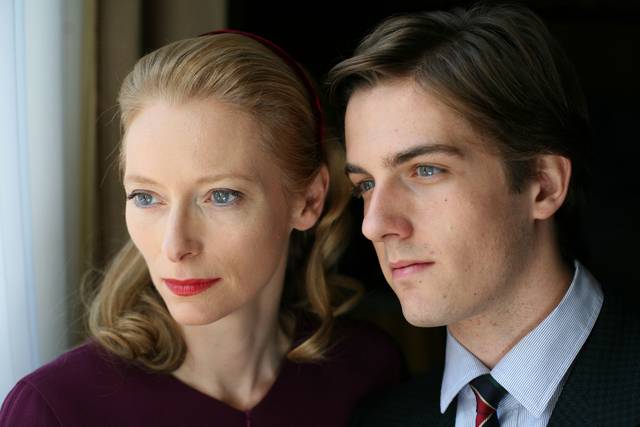
I Am Love (Italian: Io sono l'amore) is a 2009 Italian film by Luca Guadagnino set at the turn of the millennium in Milan. The film follows the fall of the haute bourgeoisie due to the forces of passion and unconditional love. The cast is led by Tilda Swinton as the main character Emma Recchi.

The film will premiere in the United States at the 2010 Sundance Film Festival, and premiered in both the Venice Film Festival and the Toronto Film Festival.


Set in Milan’s upper classes, in the Art Deco villa of a family of great wealth, this is a film about repression and breaking free.

The Recchi family are winners to a man – although the women look a good deal less confident. At a formal lunch party, ailing scion Edoardo Sr (Gabriele Ferzetti) celebrates his birthday by passing the business on to his son, Tancredi (Pippo Delbono), and, unexpectedly, his grandson Edoardo (Flavio Parenti), the beloved heart of the family.

Tancredi’s wife, Emma (Swinton), a Russian émigré, is evidently not entirely at ease: they have another son, Gianluca (Mattia Zaccaro) and a daughter Elizabeth (Alba Rohrwacher) who is an artist, and, it is later revealed, a lesbian.

And, fatefully, during that same evening, Eduardo Jr introduces his mother to his friend Antonio (Edoardo Gabbriellini), a chef, with whom he plans to set up a business.
Later, Emma, facing an empty nest, takes a trip to Sanremo and encounters Antonio there, as Edoardo Jr struggles against his role in the business during a trip to London. Passions flare and tensions rise, and as one thing leads to another, the Recchi family soon realizes everything will change forever.


The new collaboration between Luca Guadagnino, who returns to the big screen after Melissa P., and Tilda Swinton, who is also the film’s producer, conjures up Viscontian ghosts and decadent atmospheres, in a postmodern mix of style and intentions reminiscent of classical cinema.

Tuesday, June 15, 2010

Benson and Hedges Commercial 1973

The commercial Peter Sellers made with Spike Milligan and James Villiers for Benson and Hedges in 1973. It was directed by Peter Medak.

Monday, June 14, 2010

British investor William Chase offers funding help to Bond producers


from MI6

The man who harvested a £30m fortune from Tyrrells Potato Chips and then distilled it into Chase Vodka is seeking a licence to make another killing, this time in films - reports The Telegraph.
William Chase has contacted Barbara Broccoli, the producer behind the James Bond franchise, to see if he can offer some help in resolving the funding issues that have halted production on the latest film.
I won't bore you with the details but MGM, the studio that makes the films, is running out of cash so has had to shelve the latest film, the 23rd to be produced.
Now, Chase is a rich man from his various business endeavours, but not that rich. The budget for the last James Bond film was a cool $230m (£158m).
Still, I understand the approach hasn't been rebuffed. Good news for Bond fans. Not so good perhaps for Smirnoff. Until recently the vodka has been the film's official partner.
How will the mighty brand feel about upstaged about its upstart Herefordshire rival? I'm sure you know the line – shaken not stirred.

Thursday, June 10, 2010

The Deadly affair (1966)

The Deadly Affair is a 1966 British espionage-thriller film, based John le Carré's first novel Call for the Dead. The film stars James Mason, Harry Andrews, Simone Signoret and Maximilian Schell and was directed by Sidney Lumet from a script by Paul Dehn. In it George Smiley, the central character of the novel and many other of le Carré's books, is renamed Charles Dobbs. The soundtrack was composed by Quincy Jones, and the bossa nova theme song, "Who Needs Forever," is performed by Astrud Gilberto.


Charles Dobbs (James Mason) is a British secret agent investigating the apparent suicide of Foreign Office official Samuel Fennan. Dobbs suspects that Fennan's wife, Elsa (Simone Signoret), a survivor of an extermination camp, might have some clues, but other officials want Dobbs to drop the case. Dobbs hires a retired police inspector, Mendel (Harry Andrews), to quietly make inquiries. As they uncover some horrible implications, Dobbs also discovers that his wife Ann (Harriet Andersson) has been having an affair with a colleague, Dieter Frey (Maximilian Schell).

Director Sidney Lumet said of James Mason "I always thought he was one of the best actors who ever lived. Whatever you gave him to do he would take it, assimilate it and then make it his own. The technique was rock solid, and I fell in love with him as an actor, so every time I came across a script I wanted to direct I would start to read it thinking is there anything here for James? He had no sense of stardom at all. He wanted good billing and the best money he could get, but then all he ever thought about was how to play the part. In that sense he reminded me more of an actor in a theatre repertory ensemble than a movie star, and it was what made him so good." Lumet also directed Mason in The Sea Gull (1968), Child's Play (1972) and The Verdict (1982).

Location shooting for The Deadly Affair took place in London, in St. James Park, at the Balloon Tavern and the Chelsea Embankment in Chelsea, in Clapham and Barnes, and in Twickenham.

Director of photography Freddie Young's technique of pre-exposing the colour film negative to a small, controlled amount of light (known as "flashing" or "pre-fogging") in order to create a muted colour pallette was first used in this film. Lumet called the result "colorless color" and it proved influential, being used by other cinematographers such as Vilmos Zsigmond on McCabe and Mrs. Miller.

Monday, June 07, 2010

Silent Movie (1976)


Silent Movie is a 1976 comedy film directed by and starring Mel Brooks, and released by 20th Century Fox on June 17, 1976. The ensemble cast includes Dom DeLuise, Marty Feldman, Bernadette Peters, and Sid Caesar, with appearances by Anne Bancroft, Liza Minnelli, Burt Reynolds, James Caan, Marcel Marceau and Paul Newman playing themselves.

While indeed silent (except for one word and numerous sound effects), the film is a parody of the silent film genre, particularly the slapstick comedies of Hal Roach, Mack Sennett, and Buster Keaton. Among the film's many jokes is the fact that the only audible line in the movie is spoken by a noted mime (Marcel Marceau).

Sound is a big factor in the film's humor, as when a scene that shows New York City begins with the song "San Francisco," only to have it come to a sudden stop as if the musicians realize they are playing the wrong music. They then go into "I'll Take Manhattan" instead.

A play on the 1970s trend of large corporations buying up smaller companies is parodied in this film by the attempt of the Engulf and Devour Corporation to take control of a studio (a thinly veiled reference to Gulf+Western's takeover of Paramount Pictures).


Mel Funn, a great film director, is now recovering from a drinking problem and down on his luck. He sets out to Big Picture Studios to pitch a new script to the Chief, aided by his ever-present sidekicks Dom Bell and Marty Eggs.


His big idea: the first silent motion picture in forty years. At first the Chief, who is in danger of losing the studio to the rabidly greedy New York conglomerate Engulf & Devour, rejects the idea, but Funn convinces him that if he can get Hollywood's biggest stars to be in the film, he could save the studio.

Funn, Eggs, and Bell proceed to recruit Burt Reynolds, James Caan, Liza Minnelli, Anne Bancroft, and Paul Newman to be in their silent film. They sign up everybody they ask except for world-famous mime Marcel Marceau, who replies, "Non." (Funn fibs that he can't understand Marceau's reply because "I don't understand French.") The title card at the end suggests that Marceau later changed his mind, since he was obviously in the film.


Engulf and Devour, meanwhile, worry that Funn will save Big Picture Studios and they will be unable to buy it. They attempt to "stop Funn with sex" by sending voluptuous nightclub sensation Vilma Kaplan to seduce Funn and pretend to be in love with him.

Funn falls head over heels, but when Eggs and Bell reveal the truth to him on the day before filming begins, the director returns to drinking. He goes to pieces until discovering that Vilma has actually fallen for him. Several hundred cups of coffee sober him up.

Funn's silent movie is filmed in the blink of an eye. Unfortunately, the only copy of it is stolen from the theater by Engulf & Devour just before its big premiere.

Vilma is asked to stall the theater's audience while Funn and his associates go out to steal back their film. They succeed, but are chased by Engulf and Devour's executives. Ultimately cornered, they defeat their foes by using a soda machine that launches cans of Coca-Cola like grenades. They hurry the film to the theater, where it is shown for the first time. After the movie is over, the audience leaps to its feet while balloons and streamers fill the air. "They seem to like it," Funn says.

The film ends with a title card: "This is a true story."

Saturday, June 05, 2010

Sunday, May 30, 2010

The Quiller Memorandum (1966)

The Quiller Memorandum is a film adaptation of the 1965 spy novel The Berlin Memorandum, by Trevor Dudley-Smith under the name "Adam Hall", screenplay by Harold Pinter, directed by Michael Anderson, featuring George Segal, Max von Sydow, Senta Berger and Alec Guinness.
The film was shot on location in West Berlin and in Pinewood Studios, England and was nominated for 3 BAFTA Awards, while Pinter was nominated for an Edgar Award for the script.


In the dead of the night a man walks down a deserted Berlin street. He enters a phone booth, but as he dials a number, he is shot dead by an unseen sniper.

Jones was the second British Secret Intelligence Service (SIS) operative to be murdered in Berlin by a secret neo-Nazi organisation, Phoenix. SIS send Quiller (George Segal) to Berlin where, at the Nazis' 1936 Olympia Stadium, his controller Pol (Alec Guinness) quietly explains that "a new generation of Nazis has grown up, difficult to recognise because they don't wear uniforms any more", and orders him to find the Phoenix HQ. Pol's SIS superiors in London, Gibbs (George Sanders) and Rushington (Robert Flemyng), are occasionally seen directing the operation from their gentlemen's club.

Back in Berlin, Quiller shakes off someone following him, then confronts the tail in a pub, only to discover that the man is his SIS minder, Hengel (Peter Carsten). Hengel gives him a bowling alley ticket, a swimming-pool ticket and a newscutting, all found on Jones's body. Quiller asks after Jones at the bowling alley without success; the swimming pool manager Hassler (Günter Meisner) also sends him packing. Pretending to be a reporter, Quiller visits the school featured in the newscutting, where a teacher had recently been unmasked as a Nazi war criminal. The headmistress introduces him to teacher Inge Lindt (Senta Berger), who is fluent in English and whom he interviews about her colleagues, before then driving her back to her home and briefly stopping at her flat for a drink.

On leaving, Quiller confronts a man who seems to be following him. Having earlier told Hengel that he understands no German, Quiller is revealed to be able to speaking it fluently. The man strenuously denies following him and other men intervene in the discussion, before Quiller returns to his hotel. Outside the hotel, a porter bumps into his leg with a heavy suitcase. Quiller drives off, managing to shake his minder Hengel, but other cars appear to still be following him. Soon he becomes drowsy, and then semi-conscious while stopped at some traffic lights, where a car stops alongside him a man steps into the driving seat, pushes Quiller over, and kidnaps him.

He wakes in a chair in a palatial room, surrounded by many of the previous incidental characters, who are all Phoenix members led by a German aristocrat, Oktober (Max von Sydow). Quiller refuses to answer Oktober's questions about the SIS operation and how much they know about Phoenix, and makes a dash to escape from the room but is easily overpowered. A doctor injects Quiller with a truth serum, but although in his delirium he utters a few clues Quiller is just able to deflect Oktober's questions. Oktober orders Quiller to be killed.

Quiller comes round lying somewhere in the city beside the river. He hails a cab and steals it, evading a pursuing Mercedes before booking himself into a dingy hotel. He telephones Inge from the hall and they arrange to meet the following evening. Pol also arranges another meeting with Quiller, where his handler explains that each side is trying to discover and annihilate the other's base: Quiller alone is in a position to know both.

After sleeping with Quiller, Inge admits that she has a friend who might know the location of Phoenix's HQ. Inge takes Quiller to the swimming pool manager, Hassler, who is now much more friendly. He drives Quiller, Inge and Inge's headmistress to a dilapidated old building. Quiller wants to investigate the house on his own; Inge says she will wait for Quiller, and the pool manager and headteacher leave the car for Quiller to drive Inge home. When they are finally alone together in the car Inge tells him she loves him.

The street is the same one on which Quiller's predecessor was murdered at the start of the film. Quiller enters the house, which appears deserted, until he notices Oktober's henchmen standing all around him. They take Quiller into the same room where he was held captive and walk Quiller down to the cellar, where removal men are organising the move to a new HQ for the organisation. Quiller is horrified to see that Inge has been brought there too. Oktober offers Quiller an ultimatum: either he reveals where the SIS base is by dawn, or both of them will be killed. Quiller is released back onto the dark streets to walk and ponder, surrounded by Oktober's armed men, who - while they keep their silent distance - make it impossible for him to evade them, or use any public telephone to call his controller.

As dawn breaks, he returns to his hotel, while Oktober's men stand guard outside in the street. The hall phone has already been destroyed to prevent him using it, but he escapes into a courtyard of lock-up garages. Noticing a piece of wire on the ground, he finds that the car has been booby-trapped in case he attempted this method of escape. He leaves the engine running to explode the bomb, and Oktober's men assume that he has been killed in the explosion. Quiller reports to the SIS office with the location of Phoenix's centre of operations. Pol appears calmly indifferent as he arranges to round up the gang; they are all arrested, yet Inge turns out not to be among them.

Later, Quiller walks into Inge's classroom. Inge explains that she "was lucky they let me go", but Quiller appears to have concluded that she is not who she seems. He says that if ever he comes to Berlin again he will call her. He then walks away from the school building, as Inge watches him depart from the classroom window before returning to her schoolchildren.

In memoriam : Dennis Hopper (1936-2010)

Friday, May 21, 2010

Wednesday, May 19, 2010

Richard III (1995)

Richard III is a 1995 drama film adapted from William Shakespeare's play of the same name, starring Ian McKellen, Annette Bening, Jim Broadbent, Robert Downey Jr., Nigel Hawthorne, Kristin Scott Thomas, Dame Maggie Smith, John Wood and Dominic West.

The film relocates the play's events to a fictional version of England in what appears to be a fascist-inspired 1930s. Despite some anachronisms, the film's atmosphere is easily recognizable to viewers.

The film's concept was based on a stage production directed by Richard Eyre for the Royal National Theatre, which also starred McKellen. The production was adapted for the screen by McKellen and directed by Richard Loncraine.

The film is notable for its unconventional use of famous English landmarks, often using special effects to move them to new locations. The transformed landmarks used include the following:

  • St Pancras railway station is relocated to Westminster and becomes King Edward's seat of government.
  • Battersea Power Station is relocated to the coast of Kent and becomes a bombed-out military base.
  • Bankside Power Station becomes the Tower of London where Clarence is imprisoned.
  • Brighton Pavilion is relocated to a coastal clifftop and becomes King Edward's country retreat.
  • Senate House of the University of London is Richard's seat of government and is used for interior and exterior scenes.
  • The famous art deco facade and clock of Shell Mex House is also featured in exterior shots.


Perhaps the play's most famous line—"A horse! A horse! My kingdom for a horse!"—was recontextualised by the new setting; during the climactic battle, Richard's scout car becomes stuck, and his lament is cast as a plea for a mode of transport with legs rather than wheels.

In a surprising ending, where Richard refuses to be captured and leaps down to his death with the "wrong" closing line "Let us to't pell-mell; if not to heaven, then hand-in-hand to hell", his falling into the inferno is followed by the eerily upbeat tune "I'm Sitting On The Top Of The World" (Ray Henderson, Joe Young and Sam Lewis) in the classic version sung by Al Jolson.

The film enlarges the role of the Duchess of York considerably by combining her character with that of Queen Margaret. The roles of Rivers, Grey and Vaughan are combined into Rivers. The death scenes are shown rather than implied as in the play, and changed to suit the time (Hastings is hanged rather than beheaded) or historical accuracy (Clarence dies by having his throat cut in a bathtub, rather than being drowned in a wine barrel). Each character's pre-death monologues is also removed, except that of Clarence.

McKellen himself stated on his website: "When you put this amazing old story in a believable modern setting, it will hopefully raise the hair on the back of your neck, and you won't be able to dismiss it as 'just a movie' or, indeed, as 'just old-fashioned Shakespeare.'"

Friday, May 14, 2010

Zeppelin


A Zeppelin is a type of rigid airship pioneered by the German Count Ferdinand von Zeppelin in the early 20th century. It was based on designs he had outlined in 1874 and detailed in 1893. His plans were reviewed by committee in 1894 and patented in the United States on 14 March 1899. Given the outstanding success of the Zeppelin design, the term zeppelin in casual use came to refer to all rigid airships.

The zeppelin airships were lighter-than-air craft using a rigid frame construction with an aerodynamic outer envelope and several separate balloons called 'cells' containing the lighter-than-air gas hydrogen completely within the frame. A comparatively small compartment for passengers and crew was built into the bottom of the frame. Several internal combustion engines provided motive power.

In addition to founding the airship construction business, which altogether finished 119 ships until 1938, in the early 20th century, Count von Zeppelin also founded the world's first commercial airline called DELAG (Deutsche Luftschiffahrts-AG). Both business were based in Friedrichshafen, Germany.

Zeppelins were operated by the Deutsche Luftschiffahrts and served scheduled flights before World War I. After the outbreak of war, the German military made extensive use of Zeppelins as bombers and scouts.

When the elderly Count died in 1917, his place as head of the Zeppelin business was taken by Hugo Eckener. Eckener was both a master of publicity as well as an extremely skilled airship captain. It was under Eckener's guidance that the Zeppelins reached their zenith. The most successful airship of this period was LZ 127 "Graf Zeppelin" which flew over 1 million miles including the first (and, to date, only) circumnavigation of the globe via airship.


Following 1933, the establishment of the Third Reich in Germany began to overshadow the Zeppelin business. The Nazis were not interested in Eckener's ideals of peacefully connecting people; they also knew very well dirigibles would be useless in combat and thus chose to focus on heavier-than-air technology.

On the other hand, they were eager to exploit the popularity of the airships for propaganda. As Eckener refused to cooperate, Hermann Göring, the German Air minister, formed a new airline in 1935, the Deutsche Zeppelin-Reederei (DZR), which took over operation of airship flights. Zeppelins would now display the Nazi swastika on their fins and occasionally tour Germany to play march music and propaganda speeches for the people from the air.

On 4 March 1936, LZ 129 Hindenburg (named after former President of Germany Paul von Hindenburg by Eckener) made her first flight. The Hindenburg was the largest airship ever built. However, in the new political situation, Eckener had not obtained the helium to inflate it due to a military embargo; only the United States possessed the rare gas in usable quantities. So, in what ultimately proved a fatal decision, the Hindenburg was filled with flammable hydrogen. Apart from the propaganda missions, LZ 129 began to serve the transatlantic lines together with Graf Zeppelin.

On 6 May 1937, while landing in Lakehurst after a transatlantic flight, in front of thousands of spectators, the tail of the ship caught fire, and within seconds, the Hindenburg burst into flames, killing 35 of the 97 people on board and one member of the ground crew. The actual cause of the fire has not been definitively determined; it is likely that a combination of leaking hydrogen from a torn gas bag, the vibrations caused by a swift rotation for a quicker landing to have started static electricity in the duralumin alloy skeleton and a flammable outer coating similar to rocket fuel accounted for the fact that the fire spread from its starting point in the tail to engulf the entire airship so rapidly (34 seconds).

Whatever caused the disaster, the end of the dirigible era was due to politics and the upcoming war, not the wreck itself, though it surely led to some public misgivings. Despite everything, there remained a list of 400 people who still wanted to fly as Zeppelin passengers and had paid for the trip. Their money was refunded in 1940.


Graf Zeppelin completed more flights, though not for overseas commercial flights to the U.S., and was retired one month after the Hindenburg wreck and turned into a museum. Dr. Eckener kept trying to obtain helium gas for Hindenburg's sister ship, Graf Zeppelin II, but due to political bias against the airship's commercial use by the Nazi leadership, coupled with the inability to obtain helium gas in sufficient quantities due to an embargo by the United States, his efforts were in vain. The intended new flagship Zeppelin was completed in 1938 and, inflated with hydrogen, made some test flights (the first on 14 September), but never carried passengers. Another project, LZ 131, designed to be even larger than Hindenburg and Graf Zeppelin II, never progressed beyond the production of some single skeleton rings.


The Art Deco spire of the Empire State Building was originally designed to serve as a dirigible terminal for Zeppelins and other airships to dock.

Wednesday, May 12, 2010

Monday, May 10, 2010

In memoriam : LENA HORNE (1917-2010)


Lena Horne, the legendary actress-singer who broke new ground in Hollywood and was active in the Civil Rights movement, has died. She was 92. Horne passed away at New York-Presbyterian/Weill Cornell Medical Center in New York on Sunday night (May 9), as announced by son-in-law Kevin Buckley, reports the New York Times.

As one of the first black performers to significantly infiltrate the studio system by signing a long-term contract with MGM, Horne was instrumental in integrating Hollywood. She appeared in a few well known musicals such as "Stormy Weather" -- which is also one of her signature songs -- and "Ziegfield Follies."

Horne was born in June 1917 in Brooklyn. By her teens she began singing in nightclubs, including the famed Cotton Club as a chorus girl.

Although her Hollywood career spanned six decades, she never really achieved any huge success in that arena often because of her African American heritage was seen by studios as a deterrent when casting for lead roles or roles that might necessitate an interracial relationship on screen.

She was best known in the entertainment world for her singing and showcased that in more nightclubs, on Broadway and on TV variety shows, including "The Ed Sullivan Show" and "The Judy Garland Show." Later in her career she appeared on "The Cosby Show" and "The Muppet Show."

She won several Grammy awards over her career and received a best actress Tony nomination for the musical "Jamaica." Later, she received a special Tony for her one-woman show, "Lena Horne: The Lady and Her Music."

Her contributions to the Civil Rights movement include working alongside Paul Robeson and Medgar Evers, participating on the March on Washington and collaborating to end desegregation and lynching.

Monday, May 03, 2010

Elephants dream (2006)

Elephants Dream is a computer-generated short film that was produced almost completely using the free software 3D suite Blender (except for the modular sound studio Reaktor and the cluster that rendered the final production, which ran Mac OS X). It premiered on March 24, 2006, after about 8 months of work. Beginning in September 2005, it was developed under the name Orange by a team of seven artists and animators from around the world. It was later renamed Machina and then to Elephants Dream after the way in which Dutch children's stories abruptly end.


The film was first announced in May 2005 by Ton Roosendaal, the chairman of the Blender Foundation and the lead developer of the foundation's program, Blender. A 3D modelling, animating, and rendering application, Blender was the primary piece of software used in the creation of the film. The project was joint funded by the Blender Foundation and the Netherlands Media Art Institute. The Foundation raised much of their funds by selling pre-orders of the DVD. Everyone who preordered before September 1 has his or her name listed in the film's credits. The bulk of processing for rendering this film was donated by the BSU Xseed, a 2.1 TFLOPS Apple Xserve G5-based supercomputing cluster at Bowie State University. It reportedly took 125 days to render, consuming up to 2.8GB of memory for each frame. The completed film is 10 minutes 54 seconds long, including 1 minute and 28 seconds of credits.

The film's purpose is primarily to field test, develop and showcase the capabilities of open source software, demonstrating what can be done with such tools in the field of organizing and producing quality content for films.

During the film's development, several new features such as an integrated node-based compositor, hair and fur rendering, rewritten animation system and render pipeline, and many workflow tweaks and upgrades were added into Blender especially for the project.
The film's content was released under the Creative Commons Attribution license, so that viewers may learn from it and use it however they please (provided attribution is given).

The film was released for download directly and via BitTorrent on the Official Orange Project website on May 18, 2006, along with all production files.

The movie was made mostly as an experiment, rather than to tell a certain story and therefore has a strong arbitrary and surreal atmosphere. It features two men, Proog (the elder and more experienced) and Emo (the younger and more nervous) living in a miraculous construction referred to only as "The Machine"; Proog tries to introduce Emo to its nature but the latter is reluctant and argues about its purpose. The creators originally intended for the movie to show the abstraction of a computer.

The final message is not easy to see due to the abstract nature of the movie and therefore some viewers criticized it as pointless and random, and worthy of attention only if seen as a demo. Other people have widely different interpretations of its meaning. Proog cannot abide imaginative, unpredictable fun in his so carefully crafted and isolated logical world, which is why he tries to dominate Emo and eventually attacks him. Another theory is connected to the theory of evolution, with Proog and the Machine representing multicellular life and DNA, whereas Emo represents a single mitochondrion and cannot grasp the complexity of the Machine.

Bassam Kurdali, Director of Elephants Dream, explained the plot of the movie by saying:

"The story is very simple—I'm not sure you can call it a complete story even—It is about how people create ideas/stories/fictions/social realities and communicate them or impose them on others. Thus Proog has created (in his head) the concept of a special place/machine, that he tries to "show" to Emo. When Emo doesn't accept his story, Proog becomes desperate and hits him. It's a parable of human relationships really—You can substitute many ideas (money, religion, social institutions, property) instead of Proog's machine—the story doesn't say that creating ideas is bad, just hints that it is better to share ideas than force them on others. There are lots of little clues/hints about this in the movie—many little things have a meaning—but we're not very "tight" with it, because we are hoping people will have their own ideas about the story, and make a new version of the movie. In this way (and others) we tie the story of the movie with the "open movie" idea."

The original title was to be Machina but was dropped due to pronunciation issues. One motivation for the title regarding the story was the concept of an Elephant in the room, referring to the (unspoken) fact that Proog's precious world only exists for him.


Saturday, May 01, 2010

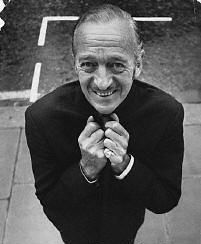
1910-2010 : David Niven 100°

No name, but a date at last…


So now we can stop wondering just when we all get to go back to Gotham City and the world of Bruce Wayne as envisioned by Christopher Nolan. Warners has set the date for Batman 3 as July 20, 2012 in the US.

The date itself isn’t a shocker – The Dark Knight arrived across the pond on July 18 two years ago and Nolan’s latest, Inception, is set for July 16. Hopefully we won’t have to wait to see it hit our cinemas – after all, Inception is day and date over here.

2012 is shaping up to be a heck of a movie year, with The Avengers, Star Trek 2, the new Spider-Man, Battleship and The Hobbit all planned for various dates.

And don’t forget the scheduled Mayan apocalypse! Good times.