Friday, June 03, 2011

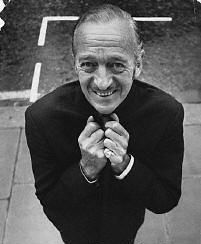
The Genius of Buster Keaton


More than fifty years have passed since critics rediscovered Buster Keaton and pronounced him the most “modern” silent film clown, a title he hasn’t shaken since. In his own day he was certainly famous but never commanded the wealth or popularity of Charlie Chaplin or Harold Lloyd, and he suffered most when talkies arrived. 
It may be that later stars like Cary Grant and Paul Newman and Harrison Ford have made us more susceptible to Keaton’s model of offhand stoicism than his own audiences were. Seeking for his ghost is a fruitless business, though; for one thing, film comedy today has swung back toward the sappy, blatant slapstick that Keaton disdained. There’s some “irony” in what Judd Apatow and Adam Sandler do, but it’s irony that clamors to win the identification of the supposedly browbeaten everyman in every audience. Keaton took your average everyman and showed how majestically alone he was.

The story of his life seems in its twists and dives borrowed from his movies, survival demanding a pure lack of sentiment. There were twenty years of child stardom in vaudeville and nearly a decade making popular silent movies, followed by alcoholism, a nasty divorce, a nastier second marriage, twenty years producing a few dreadful blockbusters for MGM followed by a long series of low-budget flops, and a third lasting marriage, until his silent work was unearthed and brought him renewed recognition. “What you have to do is create a character,” he once said. 
“Then the character just does his best, and there’s your comedy. No begging.” He embodied this attitude so entirely in his silent films that you can’t watch him without feeling won over, a partisan of the nonpartisan side.


The logic in his first pictures, the two-reel shorts, resembles the logic of dreams. It was an alternate reality that freed him from narrative obligations—one thing simply followed another—and allowed him to pack a staggering quantity of life’s particulars into each twenty-minute film. Five of his nineteen shorts end with or hinge on “Buster” (he gave the hero his first name in some of the two-reelers, and it stuck) being shaken awake from the contents of the movie we’ve been watching. 
As opposed to the occasional dream sequence in a Chaplin film, which usually dangles like an ornament from the main storyline, Keaton’s dreams and dreamlike camera effects seem to compound the stillness and inwardness of his deadpan character. They are not a break from reality but a truer form of it. 

In maybe his saddest line in Sweeney’s collection of interviews, Keaton confesses how the advent of sound ruined his appetite for playing in front of the camera: “The minute you’re not flexible that way,” i.e., not free to shoot unscripted sequences owing to rigid bosses, expensive sets, and waiting extras, “the desire to originate and ad-lib, as they call it, is gone. You’ve lost that.” The coming of sound spelled the end for Harold Lloyd, too, and a serious slowing down (and stylistic seizing up) for Chaplin, but for Keaton the arrival of the talkies has always seemed tragic, perhaps because of what it revealed about his own judgment.

Keaton wanted stories of a certain kind of innocence, and aspiration, and even mulish indifference to what might make people laugh (a hilarious film about the Civil War, for instance). His humor wasn’t a blank face that could be transferred willy-nilly to any kind of satire that might prove timely. This meant temporarily ignoring what the audience expected, and having the freedom to keep on inventing. “Anesthesia of the heart,” as Henri Bergson called it. That, after all, is the real soul of deadpan: such deep absorption in a task, or a way of being, that the audience thinks it alone can see that the whole thing’s going to hell.


Wednesday, June 01, 2011

Gil Scott-Heron (April 1, 1949 -- May 27, 2011)

USA Today

Vanessa Redgrave & Franco Nero

                        A Life in Film: Brunel University Honorary Degree ceremony for Franco Nero and Vanessa Redgrave

On the 28th May 2011 Vanessa Redgrave CBE and Franco Nero were both awarded the honorary degree of Doctor of Letters from Brunel University in recognition of their outstanding services to the arts. The event was held at the Italian Cultural Institute in London and was attended by friends, family, fans and colleagues, including the controversial Italian director Ruggero Deodato, with whom Nero has worked several times.

Redgrave was once called "the greatest actress of our time" by Tennessee Williams, and has been nominated and won many awards for both her film and theatre work since she began her career in the 1950s, where she co-starred with her father Sir Michael Redgrave in the play A Touch of the Sun.

The Italian Franco Nero is probably best known for one of his first films, the vastly entertaining and influential Spaghetti Western Django in 1966. He has appeared in over 150 films and is also involved in numerous charitable and humanitarian projects. Quentin Tarantino cites Nero as a big influence, and has recently announced that his next film will be a western, titled Django Unchained. Nero was unable to confirm or deny rumours that he has been cast in this film.

Redgrave and Nero were married in 2006, despite first meeting on the set of Camelot in 1967. They were together for a short while then, and have one son Carlo, but it took almost forty years for them to finally get back together. This story was played out recently in the film Letters to Juliet, in which they played a couple reunited after many years. They were both clearly touched to be awarded in this way by the university and gave moving words of thanks. The ceremony was followed by an onstage interview, in which they discussed the beginnings of their relationship whilst making Camelot in London. According to Nero Vanessa Redgrave asked him to give a friend a lift to the airport. Whilst they were there, she then suggested they jump on the next plane anywhere. Several hours later they found themselves driving a hired car around the streets of San Francisco! The evening was rounded off with a packed rare screening of the Italian film A Quiet Place in the Country from 1969, in which they both starred.
(from CinemaRetro)

Tuesday, May 31, 2011

Friday, May 27, 2011

Barbara Bloom

Back in 1989, when SoHo was still a booming contemporary-art center, Barbara Bloom produced a memorably trenchant installation called “The Reign of Narcissism” at Jay Gorney Modern Art on Greene Street. It was in the form of a neo-Classical period room in an imaginary museum dedicated to one Barbara Bloom. There were faux-antique marble busts portraying Ms. Bloom; fine teacups watermarked with her image; a 38-volume set of “The Complete Works of Barbara Bloom”; a tombstone with a carved epitaph that said, “She traveled the world to seek beauty” and many more artifacts testifying to the transcendent qualities of a great artist.

snort!

The Greatest

Gassman legge l'etichetta di un capo delicato

Sunday, May 22, 2011

Miles Davis 1965 circa

Champagne or beer?


The Dark Knight Rises: First Image Of Tom Hardy's Bane Revealed

Species (1995)

Species is a 1995 science fiction horror film directed by Roger Donaldson, and starring Ben Kingsley, Forest Whitaker, Natasha Henstridge, Michael Madsen, Alfred Molina, and Marg Helgenberger. The film is about a group of scientists who try to track down and trap a killer alien seductress before she successfully mates with a human male.

The creature at the center of "Species" is a result of one of those overreaching scientific experiments gone wrong. In a quiet Government lab in Utah, Xavier Fitch (Ben Kingsley) has combined human DNA with alien DNA that was beamed down from a supposedly friendly planet. The new life form, named Sil, has a supermodel's body and face, presumably from her human genes. The deadly tentacle that whips out from her mouth and tears people's throats apart comes from the extraterrestrial side of the family. As Fitch and a team of experts track Sil through Los Angeles, this science-fiction thriller is slick and competent, but ultimately too predictable and by-the-numbers.
It begins with promising strangeness, leaping into the middle of a scene that is only gradually explained. A 12-year-old blond girl is being gassed inside a chamber; Fitch is shedding a tear, though he understands that his prized creature must be destroyed, fast. (Some bad REM sleep has suggested violent times ahead.) But before the girl goes under, she crashes through the glass chamber and escapes. En route to Los Angeles, she kills a vagrant and a train conductor. She also mutates; her skin begins to bubble, she is enveloped in a huge sticky cocoon, and she steps off the train in L.A. as a grown woman (Natasha Henstridge) who somehow knows how to drive.

Meanwhile, Fitch is explaining his problem to a neatly balanced team of movie types. Michael Madsen plays Press Lennox, a strong, silent guy sent by a shadowy Government agency to eliminate Sil. Marg Helgenberger, as a biologist named Laura Baker, develops a crush on him. And Alfred Molina, as a wimpy Harvard anthropologist, has a crush on her. Forest Whitaker's character describes himself as an empath, a man so sensitive that he can intuit people's feelings simply by looking at photographs of them. The empath has enough to do keeping track of the romantic triangle in front of him, much less sharing the pain of a half-alien on the run.

The creature was created and designed by Swiss artist H. R. Giger, who also created the creatures in the Alien films.

Thursday, May 19, 2011

Tuesday, May 17, 2011

8 tunes for Spring, 8 tunes for Summmer out now!


shipping worldwide - enquire by post

Sunday, May 15, 2011

The Artist (2011)

The Artist is a 2011 French romance film directed by Michel Hazanavicius, starring Jean Dujardin and Bérénice Bejo. The story takes place in Hollywood between 1927 and 1931 and focuses on a declining male film star and a rising female actress. The film is a silent film and shot in black and white.

Director Michel Hazanavicius had been fantasizing about making a silent film for many years, both because many filmmakers he admires emerged in the silent era, and because of the image-driven nature of the technique. According to Hazanavicius his wish to make a silent film was at first not taken seriously, but after the financial success of his spy-film pastiches OSS 117: Cairo, Nest of Spies and OSS 117: Lost in Rio, producers started to express interest. 
The forming of the film's narrative started with Hazanavicius' desire to work again with actors Jean Dujardin and Bérénice Bejo, who had starred in the OSS 177 films. 
Hazanavicius choose the form of the melodrama, partially because he though many of the films from the silent era which have aged best are melodramas. He did extensive research about 1920s Hollywood, and studied silent films to find the right techniques to make the story comprehensible without having to use too many intertitles. The screenplay took four months to finish.

The film was produced by La Petite Reine and ARP Sélection for 13.47 million euro, including co-production support from Studio 37 and France 3 Cinéma, and pre-sales investment from Canal+ and CinéCinéma. Both the cast and crew were mixed French and American.

Filming took place during seven weeks on location in Hollywood. Throughout the shoot Hazanavicius played music from classic Hollywood films while the actors performed.

It premiered today at Cannes Festival, click the title for review. 


Black Widow (1987)

Black Widow is a 1987 neo-noir film starring Debra Winger, Theresa Russell, Sami Frey, Nicol Williamson and Dennis Hopper.
It is a crime drama about two women: one who murders wealthy men whom she marries for their money, and the other an agent with the Department of Justice who grows obsessed with bringing her to justice. It was directed by Bob Rafelson, from a screenplay by Ronald Bass. Black Widow is a late addition to the film noir revival of the 1980s, known as neo-noir.
Unlike classic noirs, neo-noir films are aware of modern circumstances and technology—details that were typically absent or unimportant to the plot of classic film noir. In the films of the early 1940s and '50s, audiences are led to understand and build a relationship with the protagonist or anti-hero. Neo-noir films of post-1970 often reverse this role. Unconventional camera movements and plot progression remind them that they are merely watching the film and not partaking in the story.
Modern themes employed in neo-noir films include identity crises, memory issues and subjectivity, and—most importantly—technological problems and their social ramifications. Because these fundamental elements are as ambiguous in practice as their definitions, film theorists argue that the term "neo-noir" can be applied to other works of fiction that similarly incorporate such motifs. Robert Arnett states that "Neo-noir has become so amorphous as a genre/movement, any film featuring a detective or crime qualifies." It is because of this genre's ambivalence that neo-noir is still shaped and interpreted so malleably today.


The story of Black Widow revolves around two women, one the femme fatale Catherine (Theresa Russell) whose true name is never revealed. She preys on wealthy middle-aged men, seducing them into marriage and killing them by a mysterious means of poisoning. Each death is misdiagnosed as Ondine's curse, a condition by which seemingly healthy middle-aged men die in their sleep. The other woman is Justice Department agent Alexandra Barnes (Debra Winger) who stumbles onto the first murder while investigating another case. As Alexandra delves further into the case, she uncovers a pattern which she believes ties the same woman to several similar murders.
Using exhaustive research, elaborate disguises, and identity changes, Catherine weaves her web anew with each murder, killing a publishing magnate, a toy maker (Dennis Hopper), and a museum curator (Nicol Williamson), and is moving quickly to her next victim: Paul Nuytten (Sami Frey), an international hotel tycoon. Later in the film she reveals she has been married six times, which suggests that she may have committed as many murders.
Receiving grudging permission from her boss Bruce (Terry O'Quinn), Alexandra decides to go undercover to track down first Catherine's background and then her next potential victim. She trails the murderer to Seattle, where Catherine kills husband number three (the museum curator), and finally to Hawaii, where the two women meet and eventually engage in a sexually intense war of wits and wills.
They both compete for the affection of wealthy Paul Nuytten, and Catherine eventually marries him. Alexandra is arrested for Paul's murder when the police find a poison in her room. Catherine visits Alexandra in prison, and while they talk, Paul shows up with Alexandra's colleagues. Alexandra tells the shocked Catherine, "yes, we know — we found the poison before he did."


This is a very good movie that reminds one what we lost when Debra Winger slowed down her movie-making. She gives an honest, heartfelt performance as an investigator chasing a woman who marries rich and whose husbands wind up dead every time. The widow then remakes her appearance, gets a new identity, and dupes another man. Only Winger is convinced that this trail of murders is the work of one woman.
Theresa Russell has the right detachment for this role. One suspects the character is a real man-hater and is, in fact, attracted to Winger. Winger is admiring of Russell's constant flirtation with danger. This is a complex relationship that the two play out.

Thursday, May 12, 2011

Wednesday, May 11, 2011

Sunday, May 08, 2011

Compulsion (1959)


Compulsion, directed by Richard Fleischer, was a film made in 1959, based on the 1956 novel Compulsion by Meyer Levin, which in turn was based on the Leopold and Loeb trial. It was the first film Richard D. Zanuck produced.

Sometimes murder is just a way to pass the time. Compulsion is a compelling stylish thriller that sees two callous law students murder a young boy in cold blood to prove their intellectual superiority. Having been raised by wealthy, snobbish families Artie Straus is a sadistic bully and Judd Steiner (Dean Stockwell) a timid introvert. The two college friends concoct the 'perfect crime' - the murder of a young boy, but their arrogance and conceit leads to their arrest. The inimitable Orson Welles plays the criminal defense lawyer, based on the famous Clarence Darrow, who takes on their almost impossible case. This outstanding courtroom drama directed by Richard Fleisher is loosely based on the notorious and horrific 1924 murder trial of thrill-killers Leopold and Loeb. It was nominated for a BAFTA and garnered the Cannes Film Festival Best Actor award for Stockwell, Dillman and Welles as well as a Palme D'Or nomination.


Compulsion' is a film of ideas, but with character and plot that cannot quite live up to the highbrow efforts of the director. The film was shot in 1959, but harks back to the earlier 1920s and the real life case of Leopold and Loeb. Either way the female characters are portrayed far too weakly in the film and moments of assault are pushed aside. These old fashioned ideals would not normally impact on a `classic' film, but in a film of ideals they cannot go unnoticed. The film feels innocent and a little hokey, but in a murdering type of way. It plays out as the dark heart of `To Kill a Mockingbird'. For this reason, although the film struggles to be taken seriously, it is still worth watching for the concepts within it.

Saturday, April 30, 2011

Thursday, April 28, 2011

Saturday, April 23, 2011

Friday, April 15, 2011

The Loneliness of the Long Distance Runner (1962)


The Loneliness of the Long Distance Runner is a 1962 film, based on the short story of the same name. The screenplay, like the short story, was written by Alan Sillitoe. The film was directed by Tony Richardson, one of the new young directors emerging from documentary films, specifically a series of 1950s filmmakers known as the Free Cinema movement.

It tells the story of "a rebellious youth" (played by Tom Courtenay), sentenced to a borstal (boys' reformatory) for robbing a bakery, who rises through the ranks of the institution through his prowess as a long distance runner. During his solitary runs, reveries of his life and times before his incarceration lead him to re-evaluate his privileged status as the Governor's (played by Michael Redgrave) prize runner."

Set in a grim environment of early-1960s Britain and like other films which deal with rebellious youth, it is a story of how the youth chooses to defy authority, in so doing securing his self-esteem (at the probable personal cost of continued confinement). The film places its characters thoroughly in their social milieu. Class consciousness abounds throughout: the "them" and "us" notions which Richardson shows reflect the very basis of British society at the time, so that Redgrave's "proper gentleman" of a Governor is in contrast to many of the young working-class inmates.

Much of the filming took place in and around Claygate, Surrey at Ruxley Towers, a Victorian mock castle built by Lord Foley (hence Ruxton Towers). The building had been used as a NAAFI base in the war, giving it a military atmosphere. The original trumpet theme to the movie was performed by Fred Muscroft (the Scots Guards Principal Cornet at the time).


At times a wrenching character study with no easy answers, Courtenay's performance is a touching portrait of a young man and the journey he takes as he tries to run not only for an unclear future, but from a past he cannot forget. 

A film indicative of the working class expressionism that came out of England in the early 1960s, Richardson's films stands alone as a downbeat, but insightful story of one man's struggle to determine who he is.

Saturday, April 09, 2011

In memoriam: Sidney Lumet (1924-2011)

The Innocents (1961)

The Innocents is a 1961 British horror film based on the novella The Turn of the Screw by Henry James. The title of the film was taken from William Archibald's stage adaptation of James' novella. Directed and produced by Jack Clayton, with a screenplay by Archibald and Truman Capote for additional dialogue, it stars Deborah Kerr, Michael Redgrave and Megs Jenkins.

 Falling into the subgenre of psychological horror, the film makes use of its lighting, music, and direction for its effect rather than gore and shock factor. Its atmospheric feel was achieved by cinematographer Freddie Francis, who employed deep focus in many scenes, as well as bold, minimal lighting. It was filmed on location at the gothic mansion of Sheffield Park in East Sussex. The film marked the first film role for child actor Pamela Franklin.

Jack Clayton wanted this film to be different, not a repeat of the Hammer horror movies, many were running in theaters then. He used different distances between camera and objects, black and white photography by Freddie Francis, a deliberate 45 second start in black with singing followed by the credits (which projectionists thought was an error), and made no revelation of the story to child actors Martin Stephens and Pamela Franklin, deciding to give them the parts of the script without the adult touches that would be revealed later to the viewers and the person of Miss Giddens. With these tangibles, Clayton achieved his goal of a horror film that left the strange events for the viewer to interpret.

The inventive and atmospheric black-and-white CinemaScope by photographer Freddie Francis is as celebrated as the screenplay's Jamesian suggestiveness.

Together Francis and Clayton use graceful cinematic techniques to do more than just illustrate James' novel. While their motif of dropping rose petals too pointedly shouts "symbolism," their use of white doves against the morbid and melancholy goings-on brings to mind the European delicacy of Franju's Eyes Without a Face.

Deborah Kerr's layered portrayal is among the finest in her career. Whether or not Miss Giddens sees real apparitions or is a victim of simply needing a good roll in the four-poster, by not choosing to "play neurotic" Kerr achieves a reality that makes her exactly the right place to anchor our perspective.

Add the remarkable performances by the two children, and we're given a ghost story that stays with us not because of spring-loaded frights, but because of how it plucks our nervous system like a violin string.

Life is a state of Mind

Wednesday, April 06, 2011

The Avengers 50th Anniversary event

To celebrate the 50th anniversary of cult TV show The Avengers, The University of Chichester is hosting an event this summer featuring, cast, crew and of course, a host of Avengers-related events.

It takes place over 25th and 26th June, with guests so far confirmed including Honor Blackman (Cathy Gale), Linda Thorson (Tara King), scriptwriter Brian Clemens and director Robert Fuest, plus many more actors, and production people. There's also new and exclusive video contributions from Patrick Macnee, Laurie Johnson and Joanna Lumley.
Diana Rigg? Not mentioned so far…we can hope.

Events for the weekend include everything from BFI-sponsored screenings, memorabilia exhibitions and signings through to a 'craft stage', 'Emma Peel's Lotus Display' and 'The Hellfire Club Saturday Night Party'. Check out the website for everything confirmed so far, with more to come before the mid-summer date.

Tickets are £80 per day or £150 for the weekend ticket, with accommodation available within the university campus, priced from £36 per night.

Bond 23 Location Scouting In South Africa

MI6 revealed today that director Sam Mendes and producer Barbara Broccoli are understood to be in South Africa prepping for production of the 23rd James Bond film.

Former England international cricketer Darren Gough spilled the beans as he sat next to the pair during a first class Virgin flight to Johannesburg earlier today. Gough said that they were travelling to scout locations for the film. Whether their location work is based just in South Africa is unclear. No James Bond actor has filmed scenes in the country before, although it was visited by villains Wint & Kidd in the 1971  "Diamonds Are Forever".

South Africa has been a long-rumoured location for a future 007 adventure, with press reports routinely linking the nation to upcoming movies. At one time, "Casino Royale" (2006) was scheduled to shoot there, but plans switched before cameras rolled.

Monday, April 04, 2011

The history and building of the Zeppelin

Sexy Beast (2000)


Sexy Beast is a 2000 British film directed by Jonathan Glazer, starring Ray Winstone, Sir Ben Kingsley and Ian McShane. It was produced by Jeremy Thomas, and was Glazer's debut feature film. He had previously been a director of music videos, such as Rabbit in Your Headlights for British electronica group UNKLE, and commercials for companies such as Guinness and Levi.
The film earned Kingsley an Oscar nomination for Best Supporting Actor. In 2004 the magazine Total Film named Sexy Beast the 15th greatest British film of all time


More than twenty years ago, Ben Kingsley won the Academy Award for his role in Gandhi. With his role as Don Logan in Sexy Beast, Kingsley shatters any leftover notions of a king, gentle, passively resistant Kingsley and cements the fact that he is a damn good actor. He is frightening as Don Logan, a criminal sent to Spain to try to coax another retired criminal out of hiding for one last heist. First, Logan looks menacing. He has a shaved head, beady eyes, and a goatee. Kingsley has an explosive energy as Logan, as if he could kill somebody at any moment without batting an eye. Logan shifts between a raving lunatic and a cold, calculating schemer. He is cruel, intense, and effective both when he is yelling in an unintelligible English accent and coolly trying to convince Gary "Gal" Dove to come back to England.


Dove (Ray Winstone) enjoys his new life. Sexy Beast opens with him lazing by a pool, burning in the Spanish sun. He is content to swim, joke around with his poolboy, and meet his wife and friends for dinner and drinks for the rest of his life. Within a couple minutes, a huge boulder rolls down the hill, barely misses him, and crashes into his pool ruining the tiling. Oh, what a foreshadowing of things to come. Soon, his friends come with the news that Logan is arriving, casting a pall over their idyllic, lazy lives. Logan arrives and proceeds to pester, berate, harass, and intimidate Dove into going back to London. Sexy Beast is at heart a movie about Dove, although Logan steals the show every time he is on screen. Dove, self-admittedly not rich but comfortable, has to decide whether he wants to participate. Returning signifies everything he does not want. He loves the isolation and heat of Spain, in contrast to the dreariness of London. Here, he can do (and does) whatever he wants, which is usually nothing.

The internal struggle never quite emerges, because of Winstone's subdued performance. Dove could just care less at some points in the film. He looks reasonably irked that someone is disturbing him, and does not react substantively until after Logan becomes increasingly perturbed himself. Screenwriters Louis Mellis and David Scinto also never fully flesh this idea out. Sure, everybody is deathly afraid that Logan will go ballistic on them, but what else is driving Dove? The third act of the movie also helps muddle Dove's intentions. The first act is him relaxing, and the second is with Logan in Spain. The third act is a change of pace for everybody, and suffers because of a lack of Kingsley's character.

David Lynch's PS2 Commercial - Bambi

Sunday, April 03, 2011

Saturday, April 02, 2011

Friday, April 01, 2011

Wednesday, March 30, 2011

Tuesday, March 29, 2011

Sunday, March 27, 2011

News on Bond 23 : shooting starts on November 2011

After trade press reports claimed Ralph Fiennes was linked to a role in the 23rd James Bond film and his filming was scheduled for December this year. Today, Dame Judi Dench has revealed that shooting is planned to start even earlier.

Dame Judi revealed the start date for filming during a visit last week to Hever Castle in Kent, to plant a rose bred for its gardens - reports the Daily Express.

She said: “I am going to do the next Bond in November. I don’t know the location yet but hopefully it will be somewhere nice. I can’t tell you much more but I do enjoy playing M as she is such a strong character. I like being bossy and my grandson thinks its cool that I’m in Bond.”

Wile E. Coyote 127 Hours

Friday, March 25, 2011

Crisis (1950)

Crisis is a 1950 drama film about an American couple who become embroiled in a revolution. It was based on the short story "The Doubters" by George Tabori.

Dr. Eugene Ferguson (Cary Grant), a renowned American brain surgeon, and his wife Helen (Paula Raymond) are vacationing in Latin America when a revolution breaks out. They are taken against their will to the country's dictator, Raoul Farrago (José Ferrer), who urgently needs a life-saving operation. Over the next few days, while Ferguson trains assistants for the operation, he witnesses various acts of brutality by the regime, especially by Colonel Adragon (Ramón Novarro), but his Hippocratic Oath compels him to do his best.

Roland Gonzales (Gilbert Roland), the rebel leader, kidnaps Helen to pressure her husband into making a fatal surgical "mistake", but his message to Ferguson is intercepted by Isabel Farrago (Signe Hasso), the patient's wife, and the operation is a success. Fortunately for the doctor, Helen is released unharmed when Farrago dies soon afterwards and his government is overthrown.

This is an interesting and thought-provoking story. Even though it was made in 1950, many of the statements and circumstances are timely to the world today. Dictators still rule and are also overthrown. But are their replacements any better than they were? And what about the medical oath that doctors take? Are they bound to save the life of even the worst tyrant?

Cary Grant is a likeable Dr. Ferguson. He goes about his daily life with a sense of calmness and understanding. Even though he is troubled by the situation, he remains calm, cool, and collected. Jose Ferrer as Farrago shows here once again his greatest acting capability.

McLuxury


Wednesday, March 23, 2011

Tuesday, March 22, 2011

Sunday, March 20, 2011

Mariel Clayton dolls

click title for website

Saturday, March 19, 2011