Wednesday, July 11, 2012


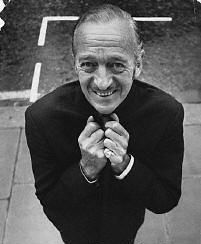
Peter O'Toole retires

Peter O'Toole announced on Tuesday he is retiring from acting in films and stage.
"It is time for me to chuck in the sponge. To retire from films and stage. The heart for it has gone out of me: it won't come back,"
O'Toole, who is 79 and lives in London, said in a statement released by New York publicist Bill Augustin.
O'Toole said that his career, which has included eight Academy Award nominations without a win, "has brought me public support, emotional fulfillment and material comfort. It has brought me together with fine people, good companions with whom I've shared the inevitable lot of all actors: flops and hits."
"However," he added. "It's my belief that one should decide for oneself when it is time to end one's stay."
Early in his career, O'Toole made waves on stage in several key Shakespearean roles, including an acclaimed turn as "Hamlet," before gaining fame in films such as "Goodbye, Mr. Chips," "The Ruling Class", "The Stunt Man" and "My Favorite Year."
His last Oscar nomination was for Best Actor in the 2006 film "Venus." He won an honorary Oscar in 2003 for his numerous memorable roles.
O'Toole said he is now spending his time working on the third volume of his memoirs.
The film website imdb.com listed O'Toole as co-starring in the upcoming British film "Katherine of Alexandria."
O'Toole finished the statement by saying, "I bid the profession a dry-eyed and profoundly grateful farewell."
Tuesday, July 10, 2012
Monday, July 09, 2012


Sunday, July 08, 2012


Saturday, July 07, 2012

Friday, July 06, 2012

Thursday, July 05, 2012
The Surrealist Chart of Erotic Hand Signaling
In the early 1920s, Surrealism emerged as a new cultural rhetoric and aesthetic rooted in using the element of surprise to open up new frontiers of the imagination, blending the playful with the philosophical. A Book of Surrealist Games (public library), originally published in 1891, is part activity book for grown-ups, part essential art history, featuring word and image games that the surrealists — including Salvador Dalí, René Magritte, Pablo Picasso (to a degree), Max Ernst, and André Breton — developed to create their written and graphical art. Among them is this erotic hand signaling chart, a naughty adaptation of the standard American Sign Language manual alphabet.

Wednesday, July 04, 2012
FRANKENSTEIN: The True Story (1973)

Frankenstein: The True Story is a 1973 American made-for-television horror film loosely based on the novel Frankenstein by Mary Shelley.
It was directed by Jack Smight, and the screenplay was co-written by novelist Christopher Isherwood.
The film starred Leonard Whiting as Victor Frankenstein, Jane Seymour as Prima, David McCallum as Henry Clerval, James Mason as Dr Polidori and Michael Sarrazin as the Creature. James Mason's wife, Clarissa Kaye-Mason also appeared in the film.
The character of Dr Polidori, who did not appear in the original novel, was based on the character of Dr. Pretorious from Universal Pictures The Bride of Frankenstein, but named after the real-life John Polidori, an acquaintance of author Mary Shelley who was part of the competition that produced her novel. Polidori's own contribution was the first modern vampire story The Vampyre (1819).
A notable feature of the production is that, instead of being ugly from the start, the Creature is portrayed as physically beautiful but increasingly hideous as the film progresses. The make-up was by Hammer horror veteran artist Roy Ashton.
Subscribe to:
Posts (Atom)