Thursday, July 26, 2007
Monday, July 02, 2007
Blade Runner 25th anniversary


Today marks the 25th anniversary of the release of the movie Blade Runner. The film's neo-noir production is cited as having influenced building design. Some argue that its dystopic setting of Los Angeles in 2019 is not far removed from life on the streets of downtown Los Angeles today.

Tuesday, June 19, 2007
YOU ONLY LIVE TWICE - 40th Anniversary

It's hard to believe it's been 40 years since the fifth James Bond epic, You Only Live Twice opened on theater screens around the world. To commemorate the occasion, Lee Pfeiffer and Dave Worrall (authors of the best-selling book The Essential James Bond) along with Bond author and CR columnist Raymond Benson, have provided reflections on the legacy of the film. These articles can be found on the 007 web site www.mi6.co.uk.
Ahead of the film's opening, the publicity campaign for You Only Live Twice was facing opposition with the unofficial spoof version of Casino Royale also opening the same year. United Artists ensured Bond was on top with a stunning billboard that spanned an entire block in New York City above the Astor and Victoria theatres in December 1966.
Shortly before its release, two television specials were broadcast to hype Sean Connery's fifth outing as 007. BBC 1 in the UK aired a special edition of "Whicker's World" with a behind-the-scenes look at the film, and NBC in the USA broadcast "Welcome To Japan, Mr Bond", a special featuring skits by M, Q and Moneypenny. Both can now be found on the Ultimate Edition DVD.
On the night of June 12th 1967, the World premiere of You Only Live Twice took place at the Odeon Cinema in London's Leicester Square, sponsored by the Variety Club of Great Britain in aid of the YMCA and Imperial Cancer Research Fund.
As with previous Bond premieres and blockbusters of the time, the crowds began to gather outside the Odeon early in preparation for the big event hoping to get a glimpse of the stars that would be attending. What made the premiere of You Only Live Twice all that more special was the appearance of Her Majesty Queen Elizabeth II and her husband Prince Phillip. The event would be their first James Bond premiere and paved the way to future attendances.
Amongst the many cast and crew members, Sean Connery and wife Diana Cilento were the star attraction, especially as it was Connery's first British 007 premiere since From Russia With Love. Connery looked very un-Bond-like as he sported a bushy moustache and did not don his usual toupee.
Along with the usual press entourage were household names such as Jerry Lewis, Phil Silvers and Dick Van Dyke, as well as members of the production crew such as screenwriter Roald Dahl and producers Albert Broccoli and Harry Saltzman.
Guy Hamilton, who had previously directed "Goldfinger", was also in attendance.
You Only Live Twice broke the opening day record at the Odeon Leicester Square in London, and instantly became the number one film in the USA when it opened the following day. It took a total of over $600,000 in Balitmore, Boston, Chicago, Los Angeles, New York and Philadelphia over its first weekend, and scooped almost $7m across 161 venues nationwide in its first three weeks.

Tuesday, June 12, 2007

Saturday, June 09, 2007
Wednesday, March 28, 2007
Just the Beginning: The Art of Film Titles
Indeed, naturally I think that a film should have a beginning, middle, and an end—but not necessarily in that order.
Jean Luc Goddard
The main-title sequence—the opening credits—can be the most important moment in a film. Other than trailers and marketing elements, they are the first images the audience sees when the lights go down. These quick segments (all about two to three minutes) form a contract: outlining the filmmaker's intentions and setting up the expectations of those watching. Saul Bass, a graphic artist in the film industry said, "making a main-title was like making a poster—you're condensing the event into this one concept, this one metaphor…a backstory that needs to be told or a character that needs to be introduced."
The pioneering work of Bass in the fifties and sixties and its revitalization by Kyle Cooper and Imaginary Forces in the nineties, have elevated the opening credits to an art form. The title sequence has come to rival commercials and music videos as the leading indicator of contemporary visual style: dense and multi-layered—invariably more challenging than the film that follows it. This essay will examine two sets of titles that revolutionized the film industry: Saul Bass's North by Northwest (1959) and Psycho (1960), and Kyle Cooper's designs for Seven (1995) and Mimic (1997). Separated by more than 35 years, these credits blend similar methods and techniques to achieve new sensibilities and affect.
The earliest credit sequences were for silent films. They were presented on title cards—cards containing printed material that were photographed and later incorporated into the movie. These cards also included the dialogue and set the time, place and action for the scenes. As cinema evolved, so did the titles. After the implementation of sound, titles began to function as a transition: taking on the responsibility of displaying the movie's title, the name of the director and establishing the hierarchy of actors. In the 1950s, titles began to move beyond pragmatic communication and evolved into complete narratives—establishing the mood and visual character of the film.
Saul Bass was the industry's pioneer. His methodology embraced the modernist tenet of reduction and enforced an acute attention to pace, rhythm and detail. Bass's most remarkable work came through his early collaboration with director Alfred Hitchcock. 2 Bass was a graphic artist and creative consultant for three of Hitchcock's masterpieces: Vertigo (1958), North by Northwest (1959) and Psycho (1960). In each of these movies Bass designed the title sequence creating a smaller film within the entire work.
Bass was instrumental in redefining the visual language of film. His graphic compositions in movement, coupled with the musical score, function as a prologue to the movie; setting the tone, establishing the mood and foreshadowing the action. His titles are not simply identification tags, but pieces that are integral to the work as a whole. When his opening sequence appears, the movie truly begins.
Occasionally, a new idea changes the course of thinking within a profession. Since Saul Bass's death in 1996, there is one designer and one key film that have seized the public's attention: Kyle Cooper and his opening credits for Seven. Cooper was one of the first designers to apply trends in print, advertising and record industry graphics to the conservative film industry. The title work with which Cooper is associated created a sensation because it revitalized an area that had become a routine after-thought in motion pictures. Except for Bass, there were no role models or tradition Cooper could look to. 5 Reflecting on Seven, Cooper said, "…I think the reason it got everybody's attention was less about the graphical language and more about the idea."
Kyle Cooper studied at Yale under Paul Rand. He was drawn to Rand's graphic design; particularly the way he suggested motion in stasis. Cooper knew he wanted to design movie titles, but Rand discouraged him from doing his dissertation on the subject. Instead he suggested that he study Soviet cinema masters like Sergei Eisenstein. According to Cooper, "Rand said, 'If you want to major in title design, go and read [Eisenstein's] Film Form and [The] Film Sense…'." Cooper was so intrigued by Eisenstein's art of combining and juxtaposing images, he wrote his thesis on the subject.
After receiving his MFA in graphic design, Cooper headed to New York and started working on main titles with Robert and Richard Greenberg (R/Greenberg Associates). For ten years, he toiled in relative anonymity on some 70 projects. At R/GA he helped create stunning openers for blockbuster films like True Lies, and Twister. But Cooper was striving for a breakthrough. In 1995 he got his chance: Seven.
Cooper's work after Seven is intricate, densely layered and relies heavily on computer-manipulated imagery. After its breakthrough, he worked with R/GA to create the opening for John Frankenheimer's otherwise forgettable interpretation of H.G. Welles's novel The Island of Dr. Moreau. During the project, Cooper, Chip Houghton and Peter Frankfurt were working out of R/GA's Los Angeles office. In 1997, they decided to strike out on their own and founded Imaginary Forces. "We left," said Houghton, "because we wanted to run a company the way we wanted to run it, to decide what project we wanted to work on, how we wanted to work on them."
Motion design in opening credits is not a revolutionary process. Saul Bass pioneered the work, but Kyle Cooper incorporated the computer to reconcile traditional and modern techniques. In doing so, he revitalized film industry titles and redefined their visual style.
Main titles are often the last thing on a director's mind, and for producers they are generally something to get out of the way as cheaply as possible. As postproduction costs become less and less, the technology needed to produce these sequences is becoming more widespread and accessible. A second tier of designers—those replicating style—have started to emerge.
Friday, March 16, 2007
Tuesday, March 13, 2007
Saturday, February 10, 2007
Thursday, January 04, 2007
2007 : a year of 13 full moons

Full Moon dates 2007
2007 Jan 3 13:59 Wed
2007 Feb 2 05:47 Fri
2007 Mar 3 23:18 Sat
2007 Apr 2 17:16 Mon
2007 May 2 10:11 Wed
2007 Jun 1 01:05 Fri
2007 Jun 30 13:50 Sat
2007 Jul 30 00:48 Mon
2007 Aug 28 10:35 Tue
2007 Sep 26 19:46 Wed
2007 Oct 26 04:53 Fri
2007 Nov 24 14:31 Sat
2007 Dec 24 01:17 Mon
January: Wolf Moon
February: Snow Moon, Hunger Moon, Opening Buds Moon
March: Maple Sugar Moon,Worm Moon
April: Frog Moon,Pink Moon,Planter's Moon
May: Flower Moon,Budding Moon
June: Strawberry Moon
July: Blood Moon,Buck Moon
August: Moon of the Green Corn,Sturgeon Moon
September: Harvest Moon
October: Hunter's Moon,Moon of Falling Leaves
November: Beaver Moon
December: Cold Moon
Wednesday, December 27, 2006
HansBellmer(1902.1975)

Hans Bellmer (1902 Katowice, Germany – 23 February 1975 Paris, France) was an artist, best known for the life-sized pubescent female dolls he produced in the mid-1930s after the rise to power of the Nazi Party in 1933. He is also commonly thought of, in the art world, as a Surrealist photographer.
Since 1926 he had been working as a draftsman for his own advertising company. He initiated his doll project to oppose the fascism of the Nazi Party by declaring that he would make no work that would support the German state. Represented by mutated forms and unconventional poses, his dolls were directed specifically at the cult of the perfect body then prominent in Germany. Bellmer was influenced in his choice of art form by reading the published letters of Oskar Kokoschka (Der Fetisch, 1925).
He visited Paris in 1935 and made contacts there such as Paul Éluard, but returned to Berlin because his wife Margarete was dying of tuberculosis.

Bellmer's 1934 anonymous book The Doll (Die Puppe), produced and published privately in Germany, contains 10 black-and-white photographs of Bellmer's first doll arranged in a series of "tableaux vivants" (living pictures). The book was not credited to him, he worked in isolation, and his photographs remained almost unknown in Germany. Yet Bellmer's work was eventually declared "degenerate" by the Nazi Party, and he was forced to flee Germany to France in 1938.
His work was welcomed in the Parisian art culture of the time, especially the Surrealists under André Breton, because of the references to female beauty and the sexualization of the youthful form. His photographs were published in the Surrealist journal Minotaure. Being known among the avante-garde did not, however, prevent him from being imprisoned in the Camp des Milles prison at Aix-en-Provence for most of World War II.
After the war, Bellmer lived the rest of his life in Paris. Bellmer gave up doll making, and spent the following decades creating erotic drawings, etchings, sexually explicit photographs, paintings and prints of pubescent girls. In 1954 he met Unica Zürn, who became his long-time model. He continued making work into the 1960.

Sunday, December 24, 2006
The Old ‘New Bond’ Syndrome: A look at the music of Bond by Austin O'Brien.


The new James Bond Film Casino Royale, is breaking all Box Office records. Everything Bond has been put under the microscope; from Daniel Craig’s impersonation of Ursula Andress coming out of the water to ‘How to be like Bond with the new Sony VAIO’. And of course it gave all other Media an opportunity to present their perspective of what or who is Bond.
Channel 4, the Champion of Chart shows, ‘MORI polled’ the UK’ favourite Bond music. It may have looked like just another popular TV Chart show, but as marketers we should have recorded this programme and watched it over and over in order to understand and grab a whole new dimension of branding.
It was a marathon 2 hours of programming, The producer’s quest to understand what makes a ‘Bondesque’ sound was relentless. The man himself, John Barry clearly understood the key values of Bond and what makes a track fit with that image. But if Bond is a brand, how can the principles of writing a Bond soundtrack be applied to the world of marketing? To begin to understand this, we first need to put Bond under the music spotlight in order to begin to identify the key characteristics, which go to make up a Bond theme song.
What or who is Bond? What are the characteristics and values that define the fundamental elements of Bond. It seems that Bond is a series of contradictions; seductive and romantic yet steely; sophisticated but primal ; classy and elegant but with a surprising punch and brutality that creeps up and explodes into action. He is very cool but very British and yet has a unique ability to blend on an international level.
Bond Original
The original signature James Bond theme, was written by Monty Norman and arranged by John Barry for 1962’s Dr. No, and is without doubt, one of the most instantly recognizable film songs. The first few seconds hold the four ominously subdued notes forever associated with the man himself: first B, then up a half-step to C, up another half step to C#, then back down to C. This simple chromatic rise and fall creates a sense of unsettling mystery, as if the music is pacing back and forth, frantically trying to decide where to go next. The riff we all recognise is a small musical phrase that appears time and time again, throughout the film score. In Classical music this phrase is called a ‘leitmotif’.
As the guitar riff (played by legend Vic Flick) enters and firmly roots us in the key of E minor, its melody is atypical. The high D# jumps up to stab like a knife. Though this note is still a member of the E melodic minor scale, in a traditional melody the D# would lift up to an E instead of sliding down and hanging on the D natural. It’s another subtle way Norman and Barry have crafted surprise and mystery through melody.
Finally, after the blaring trumpets have entered and fully developed the theme, they burst into a swung, ornamented variation of the opening guitar riff. But it’s not as straightforward as it seems. A careful ear will notice that the second trumpet seems to be playing in a different key. In fact, this ‘harmonized’ melody, sandwiched between the top trumpet and the bass, would actually feel more at home in the key of C# minor than E minor.
Where the original theme from Dr. No remains in the key of E minor, Goldfinger’s moves across the boundaries of key signature constantly, sometimes in the same bar!
These apparent breaks in musical ‘rules’ are inherent in Bond melodies, but then again, since when has Bond been about following the rules? And if that is the case does the music follow the same anarchic patterns?
Of course over the four decades of music, there have been new production techniques and modern trends in music and fashion. In fact, the whole series of Bond music can be studied as a microcosm of the progression of pop music in the last half-century. But it would appear that in order for any Bond theme to work with the film and image of Bond there have always been clear consistent elements that say to the listener, “Now that’s what I call Bond music!”
Bond Basics
Those early instrumentation probably are the best examples of pure Bond music signposts. Firstly, we see the use of a powerful brass section to punch out main riffs and annunciate the ‘answering phrases’. We hear examples of this in Dr. No, Goldfinger, and Thunderball; all have imposing brass orchestration, which adds to the sassy/suave glamorous feel.
Next we have the string section, used to give the song an emotional depth. From the free-flowing opening of From Russia With Love to the seductive sweeps in The World Is Not Enough. Nothing says class or romance like a rich string arrangement.
To complete the set, distinctive percussion should punctuate every inch of the theme; and although some of the more recent songs have scaled back to a standard drum kit, the ‘classic’ Bond songs always include the full orchestral percussion outfit, Congas in Live & Let Die, Jingle Bells in Goldfinger, Marimba in You Only Live Twice, and not to mention a staple diet of Timpani, Crash Cymbals, and Vibes.
Top it off with a few final garnishes that help to build the Bond image. The distinctive Vic-style guitar, the bond ‘leitmotif’ (placed wherever possible) and a Female Diva or Male Superstar with the versatility, to move from seductively quiet introductions to powerfully epic climaxes.
New Bond
It is so tempting with a new Bond every few years to reinvent the product, sometimes making change for change sake. So how well have the most recent guardians of the Bond music, the new composers and producers, succeeded in staying true to the Bond inherent values and branding?
On the surface the new Casino Royale theme song You Know My Name sung by rock musician Chris Cornell (Soundgarden, AudioSlave) and written and produced by David Arnold., doesn’t seem to musically quote any of the ‘classic’ themes, as done very directly in Goldeneye and License to Kill. But listen a little more closely and you will find them
Remember the common-chord modulation used to surprise the audience? Cornell uses this technique multiple times in the track. During the verses, a B minor chord changes to a G minor chord. During the chorus, G major becomes E major. Both these chord changes keep listeners on the edges of their seats. Remember the oddly harmonized trumpets in the original theme. This technique is back in Cornell’s vocal doubling; one voice sings in the key of B minor while the other is found in D minor.
But in terms of orchestration, You Know My Name lacks the more obvious instruments of past themes. The trumpets and strings are present, but only as a sparse backdrop to Cornell’s mountain of guitar. Like several of the more recent songs, the percussion is limited to a standard drum kit, with a bland backbeat indistinguishable from a typical pop song. And the choice of the raw-sounding Cornell as a vocalist is a far cry from the smooth British Matt Monroe or Tom Jones. The song’s packaging is strong enough to place it on the charts, but only time will tell if the Bond elements are strong enough to place it on the Bond theme favourites list ten years from now.
Traditional values in a New World
So what makes great Bond track and what other factors will help us define the general public’s response and recall? The tracks that found themselves lower down in the MORI poll all contained the classic Bond elements at some level or other and some the added bonus of pop video support and more than a sprinkling of the best record selling artists in the country- Aha, Duran Duran and Madonna?
There has been considerable research into the key indicators in music that affect the way we receive and process music. We ‘understand’ at a very primal level that certain instruments evoke certain emotions. Add strings and a composer can bring romance or sadness to the piece; change the key from major to minor and even the most musically illiterate sense the change. Why are some songs more important to us than others; why can we remember every lyric to a particular artist; cry to some songs without even knowing consciously that we are listening.
Quite simply when we hear music the brain starts to look for markers that it knows and understands - associated values, like times when it heard something similar, places, people etc. If we keep hearing those markers with the same or similar visual markers we understand, we remember and we have an expectation.
Success in the Music Industry is still measured by chart positions and this is normally the main objective. Being a number 1 is great for the short term, but will it say the same in 10 years time? You may get a hit track, but you won’t necessarily get a Bond track? Yet if writing formulaic music were the answer, the Music Industry would be a lot more successful than it is. The truth is that there are multiple variables that come into play, like most importantly, whether the song is actually any good!
Forty-four years on, the adaptation and modification of the Bond markers to reflect each new and contemporary Bonds have created many successes and as the Channel 4 poll reveals, many failures. Wander too far away from the key elements and values and the public simply gets confused.
However different it may be from the ‘classic’ Bond sound, You Know My Name is a product of its time, just as the original Bond theme was forty-four years ago. For Marketers, it raises the important question: can a brand’s music stay true to its roots while still being fresh and current?
Clearly, a classic sound can be tinkered with, sometimes successfully, sometimes unsuccessfully. Only through a real appreciation of the principle brand values, musical ingenuity and unique orchestration can a Bond song become timeless, which poses a challenge to Bond composers and indeed those responsible for safeguarding the sound of any brand. The desire to create something new for an established brand is very seductive but evidently the need to retain the core integrity of the brand is essential.
So just as the ‘credits’ roll, a few words of advice to whomever wants to write the next James Bond theme song. Remember that a classic Bond song is more than a pop hit. Remember the giants on whose shoulders you’re standing, and remember to keep it Bond…James Bond.
Friday, December 01, 2006
A P O C A L I S S E 1 3
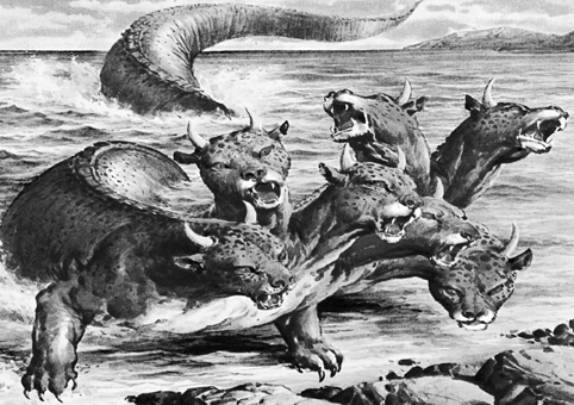
1 Vidi salire dal mare una bestia che aveva dieci corna e sette teste, sulle corna dieci diademi e su ciascuna testa un titolo blasfemo. 2 La bestia che io vidi era simile a una pantera, con le zampe come quelle di un orso e la bocca come quella di un leone. Il drago le diede la sua forza, il suo trono e la sua potestà grande. 3 Una delle sue teste sembrò colpita a morte, ma la sua piaga mortale fu guarita.
Allora la terra intera presa d'ammirazione, andò dietro alla bestia 4 e gli uomini adorarono il drago perché aveva dato il potere alla bestia e adorarono la bestia dicendo: «Chi è simile alla bestia e chi può combattere con essa?».
5 Alla bestia fu data una bocca per proferire parole d'orgoglio e bestemmie, con il potere di agire per quarantadue mesi. 6 Essa aprì la bocca per proferire bestemmie contro Dio, per bestemmiare il suo nome e la sua dimora, contro tutti quelli che abitano in cielo. 7 Le fu permesso di far guerra contro i santi e di vincerli; le fu dato potere sopra ogni stirpe, popolo, lingua e nazione. 8 L'adorarono tutti gli abitanti della terra, il cui nome non è scritto fin dalla fondazione del mondo nel libro della vita dell'Agnello immolato.
9 Chi ha orecchi, ascolti:
10 Colui che deve andare in prigionia,
andrà in prigionia;
colui che deve essere ucciso di spada
di spada sia ucciso.
In questo sta la costanza e la fede dei santi.
11 Vidi poi salire dalla terra un'altra bestia, che aveva due corna, simili a quelle di un agnello, che però parlava come un drago. 12 Essa esercita tutto il potere della prima bestia in sua presenza e costringe la terra e i suoi abitanti ad adorare la prima bestia, la cui ferita mortale era guarita. 13 Operava grandi prodigi, fino a fare scendere fuoco dal cielo sulla terra davanti agli uomini. 14 Per mezzo di questi prodigi, che le era permesso di compiere in presenza della bestia, sedusse gli abitanti della terra dicendo loro di erigere una statua alla bestia che era stata ferita dalla spada ma si era riavuta. 15 Le fu anche concesso di animare la statua della bestia sicché quella statua perfino parlasse e potesse far mettere a morte tutti coloro che non adorassero la statua della bestia. 16 Faceva sì che tutti, piccoli e grandi, ricchi e poveri, liberi e schiavi ricevessero un marchio sulla mano destra e sulla fronte; 17 e che nessuno potesse comprare o vendere senza avere tale marchio, cioè il nome della bestia o il numero del suo nome. 18 Qui sta la sapienza. Chi ha intelligenza calcoli il numero della bestia: essa rappresenta un nome d'uomo. E tal cifra è seicentosessantasei.
Tuesday, November 28, 2006

Subscribe to:
Posts (Atom)