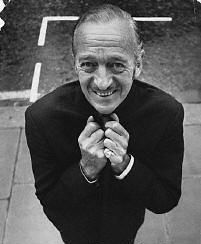
There are 8 images total in this series, these are the first two to be released from Acme as Limited Edition Fine Art Prints. The remaining 6 will be released 2 at a time over the next few months.
This 1910 version of Frankenstein was made by Edison Studios, written and directed by J. Searle Dawley. It was the first motion picture adaptation of Mary Shelley's Frankenstein. The unbilled cast included Augustus Phillips as Dr. Frankenstein, Charles Ogle as the Monster, and Mary Fuller as the doctor's fiancée.
Shot in three days, it was filmed at the Edison Studios in the Bronx, New York City. Although some sources credit Thomas Edison as the producer, he in fact played no direct part in the activities of the motion picture company that bore his name.
For many years, this film was believed to be a lost film. In 1963, a plot description and some stills were discovered published in the March 15, 1910 issue of an old Edison film catalog, The Edison Kinetogram.
In the early 1950s, a print of this film was purchased by a Wisconsin film collector, Alois F. Dettlaff, from his mother-in-law, who also collected films. He did not realize its rarity until many years later. Its existence was first revealed in the mid-1970s. Although somewhat deteriorated, the film was in viewable condition, complete with titles and tints as seen in 1910. Dettlaff had a 35 mm preservation copy made in the late 1970s. He also issued a DVD release of 1,000 copies.
In 2003, this particular film version of Frankenstein was adapted as a 40-page graphic novel, written by Chris Yambar and drawn by Robb Bihun. Called Edison's Frankenstein 1910, in the spirit of the film it is drawn in black-and-white and told through narration only, without dialogue.
BearManor Media released the public domain film in a restored edition on March 18, 2010, alongside with the novel Edison's Frankenstein, which was written by Frederick C. Wiebel, Jr.
On 14th October 2010, to celebrate the 100th anniversary of the film, English writer and director Dave Mitchell released an online re-boot of the original film called "Frankenstein 1910 2010", with new title-cards based more on Mary Shelley's original novel, as well as re-tinting of the frames, and the use of Saint-Saens' "Danse Macabre" as the new soundtrack. The new version title cards focus on the concept of the rejected creation's words to his creator, who he perceives as his friend.
The Power is a 1968 film based on the same titled science fiction novel by Frank M. Robinson. Its protagonist, a researcher named Tanner, discovers evidence of a person with psychic abilities among his coworkers. As he tries to uncover the superhuman, his existence is erased and his associates murdered, until he faces a showdown with an apparently undefeatable opponent.
Produced by George Pal and directed by Byron Haskin, it was substantially changed in the John Gay screenplay, moving the location to San Marino, California, changing most of the characters' names (although retaining the surnames of Tanner, Nordlund, and department head Professor Van Zandt), and eliminating several subplots and characters, presumably to fit the story into a 108-minute film.
George Hamilton starred as Professor Jim Tanner, Suzanne Pleshette as his teammate and romantic interest Margery Lansing (Marge Hanson in the novel), and Michael Rennie (famous among science fiction movie fans as Klaatu in The Day the Earth Stood Still) as new government liaison Mr. Nordlund. Otherwise, the story proceeds in a fashion similar to the novel, except for a somewhat different twist to the conclusion.
This somewhat obscure movie is memorable for a number of intriguing scenes, including murder by centrifuge, a seemingly possessed "Walk / Don't Walk" sign, toy soldiers firing with real gunpowder, and winking inanimate objects (the last two also in the novel). The soundtrack also memorably features a beating heart to signal the mind-control attempts and eerie music from a cymbalum (a hammered dulcimer-like instrument) accompanying the more suspenseful moments. The music, written by Oscar-winning composer Miklós Rózsa, actually contributes an amusing fourth wall-breaking moment when Tanner, hearing the haunting tune, seems to expect a new disaster, only to be visibly relieved when he finds a cymbalum-violin duet being performed in the hotel lobby. The score for this film was Rózsa's final score for a film produced by MGM, for whom he had scored numerous films throughout his career.
One of special effects animation wizard George Pal's least-known films is also one of his most impressive.
Unlike most George Pal productions which emphasize special effects, The Power is a literate, down-to-earth thriller with only a modicum of stop-animation work.
The impressive supporting cast features a wealth of familiar faces, all giving impressive performances: apart Michael Rennie, Arthur O'Connell, Aldo Ray, Earl Holliman, Ken Murray, Barbara Nichols, Nehemiah Persoff and Yvonne De Carlo. The movie has an increasingly eerie tone that at times suggests the atmosphere of both John Frankenheimer's Seven Days in May and Basil Dearden's The Man Who Haunted Himself. Hamilton, who was all-too-often cast as a pretty boy, does well playing a man suffering from both physical and psychological torture in his quest to clear his name. There's also plenty of retro-chic sex appeal from a wealth of glamor girls cast in supporting roles (including a bizarre screen credit that reads "Miss Beverly Hills"!).
Deathtrap is a 1982 thriller film based on Ira Levin's play of the same name.
The cast includes Michael Caine, Christopher Reeve, Dyan Cannon, Irene Worth and Henry Jones. Real-life movie and theatre critics Stewart Klein, Jeffrey Lyons and Joel Siegel have cameo appearances as themselves.
Sidney Bruhl is a formerly successful writer of Broadway thrillers who is trying to recover from the failure of his latest play. When Sidney returns to his wife Myra, a rich woman with a heart problem who is prone to hysterics, he tells her of his jealousy and humiliation upon the receipt of the first play of a former student. The play is called Deathtrap, and it is brilliant. Sidney's wife is horrified when he decides to lure the young writer to their East Hampton home in order to murder him and pretend that the play is his own work. But this is just the beginning of an intense game of twists and secrets.
The kissing scene between Sidney and Clifford is not in the original play. In his book The Celluloid Closet, gay film historian Vito Russo reports Reeve as saying that the kiss was booed by preview audiences in Denver, Colorado and estimating that a Time magazine report on the incident (which spoiled a key plot element) cost the film $10 million in ticket sales.
The controversy over the kiss inspired the Tom Smith song "Two Guys Kissin' (Ruined My Life)."
Eye of the Devil is a 1967 film with occult and supernatural themes.
David Niven plays the owner of a vineyard, who is called back to the estate when it falls on hard times. Accompanied by his wife (Deborah Kerr), the couple are confronted by a beautiful witch (Sharon Tate), who also lives on the estate with her brother (David Hemmings).
When Philippe de Montfaucon (the Marquis de Bellac) is informed that for the 3d successive year his vineyards near Bordeaux have failed to produce, he instructs his wife, Catherine, to remain in Paris and then leaves for his ancestral chateau. But Catherine, disturbed by his behavior, follows a few days later with their two children.
Upon arriving at the chateau, she is greeted coldly by Countess Estelle (Flora Robson), Philippe's aunt, diffidently by Père Dominic (Donald Pleasence), the local priest, and disdainfully by the menacing Christian de Caray and his equally hostile sister, Odile. Informed that her husband has gone to a nearby town for the day, Catherine wanders into a chamber in the chateau and accidentally spies Philippe and 12 other men engaged in a mystic ceremonial rite.
She is soon afterward terrorized in the Bellac woods by 12 hooded men, and later she learns that Philippe's father, believed dead, is actually living in a turret of the chateau. From him she hears of the dreadful fate her husband has set for himself: tradition decrees that whenever the vines fail for 3 years the head of the Montfaucon family must offer his life's blood as a sacrifice to the barren earth. Horrified, Catherine races from the chateau to summon help. But she is stopped by Père Dominic and taken back to Bellac, while Philippe and the 12 hooded horsemen ride through the village. She escapes but is too late to prevent the death ritual as Christian shoots an arrow into her husband's heart.
The next day Catherine leaves with her children, vowing never to return. But she is unaware of the significant glances exchanged between Père Dominic and her young son, Jacques. The new Marquis de Bellac already knows that the ancient tradition must be carried on.
Filmed in 1965, it featured the first film performance of Tate, who was cast by Filmways executive Martin Ransohoff who hailed her as his great discovery. Finally released two years later it attracted little attention, however The New York Times wrote of Tate's "chillingly beautiful but expressionless" performance. Although it was not a commercial success in the United States when first released, it was popular in Europe, and it has acquired a degree of cult status, largely due to its surreal themes, and the 1969 murder of Tate.
The film is also known by the titles Thirteen and 13.
Directed by J. Lee Thompson, Eye of the Devil is one of the last major B&W studio releases. The film had a troubled production history. The female lead had been Kim Novak, but when she was injured during filming, Deborah Kerr took over and had to reshoot all of her scenes - a costly and troublesome process. However, this meant that Kerr was reunited with her Separate Tables co-star David Niven (the pair would be seen on screen again the following year in Casino Royale).
The film is disturbing from minute one, largely because it is devoid of any humor whatsoever. Every minute exudes a sense of menace. The cinematography adds greatly to the tension and the cast is highly watchable, even if no one attempts to hide their full-throated British accents while playing French characters. (The exteriors were shot in France, the interiors were filmed at MGM's Borehamwood Studios). The movie is consistently engrossing, even if it never reaches the level one might expect, given the sterling cast. Tate makes a significant visual impression, but it should be noted that her immaculate British accent was dubbed.
Seven (stylized as Se7en) is a 1995 American crime film directed by David Fincher and written by Andrew Kevin Walker. It stars Brad Pitt, Morgan Freeman, Gwyneth Paltrow, R. Lee Ermey and Kevin Spacey. It was distributed by New Line Cinema.
David Mills (Pitt) and William Somerset (Freeman) are police detectives working in a crime-filled city, who become deeply involved in a case involving a series of sadistic murders. The murders are all in correspondence to each of the seven deadly sins: Gluttony, Envy, Lust, Pride, Sloth, Greed and Wrath.
The credit sequence is designed by Kyle Cooper.
The primary influence for the film's screenplay came from Andrew Kevin Walker's time spent in New York City while trying to make it as a screenwriter. "I didn't like my time in New York, but it's true that if I hadn't lived there I probably wouldn't have written Seven." While writing the screenplay, he envisioned actor William Hurt as Somerset and named the character after his favorite author, W. Somerset Maugham.
During pre-production, Al Pacino was considered for the Somerset role, but he decided to do City Hall. Jeremiah Chechik was attached to direct at one point. After the frustrating experience of making Alien 3, Fincher did not read a script for a year and a half. He said, "I thought I'd rather die of colon cancer than do another movie". Fincher eventually agreed to direct because he was drawn to the script, which he found to be a "connect-the-dots movie that delivers about inhumanity. It's psychologically violent. It implies so much, not about why you did but how you did it".
Fincher approached making Seven like a "tiny genre movie, the kind of movie Friedkin might have made after The Exorcist." He worked with cinematographer Darius Khondji and adopted a simple approach to the camerawork, which was influenced by the television show Cops, "how the camera is in the backseat peering over people's shoulder". Fincher allowed Walker on the set while filming for on-the-set rewrites. According to the director, "Seven is the first time I got to carry through certain things about the camera - and about what movies are or can be".
The urban streets filled with crowded, noisy denizens and an oppressive rain that always seems to fall without respite was an integral part of the film, as Fincher wanted to show a city that was "dirty, violent, polluted, often depressing. Visually and stylistically, that's how we wanted to portray this world. Everything needed to be as authentic and raw as possible." To this end, Fincher turned to production designer Arthur Max to create a dismal world that often eerily mirrors its inhabitants. "We created a setting that reflects the moral decay of the people in it," says Max. "Everything is falling apart, and nothing is working properly." The film's brooding, dark look was also created through a chemical process called bleach bypass, whereby the silver in the film stock is not removed, which in turn deepened the dark, shadowy images in the film and increased its overall tonal quality.
The special edition of the DVD and the recent blue ray make clear that other endings were considered for the film.
Planned scripted ending
In an earlier draft for the film, Walker wrote a different finale for the film, in which Doe does not kill Tracy but leads the detectives on a chase. Upon approaching an abandoned warehouse where he claims two bodies are hidden, he drops through a manhole into the sewer system, and Mills gives chase. However, he is subdued by Doe and taken to an old church, but Somerset arrives to save him. When Mills tries to fight back, Doe shoots and kills him, which prompts Somerset to shoot the killer and leave him to die in the now-burning church. After Mills is given a hero's funeral, Tracy decides to move back to Philadelphia, and Somerset promises to keep in touch with her following his retirement. It ends with him returning to the police station, making it clear that he is not finished with his job.
The studio initially wanted to go with this ending, but they dropped it after Pitt refused to promote the film unless the final ending Fincher had planned was used.
Storyboarded ending
An unfilmed but alternate ending made up of storyboards features Somerset shooting John Doe in an act of self-sacrifice to save Mills and prevent Doe from winning. The buildup to the climax is played out as it was in the final product, albeit with some minor differences. Upon learning of the death of Tracy and his unborn child, Mills tries to convince Somerset to let him kill Doe, explaining that they could claim he was trying to escape. After Somerset pleads with him to give up his gun, he asks "Who will take my place?" and then shoots Doe. When a shocked Mills yells "What are you doing?" Somerset simply says, "I'm retiring", implying that he will take responsibility and cover up what Mills planned to do.
On the DVD commentary, Fincher states that once the desired resolution to the Doe/Mills/Somerset confrontation was settled upon, the film was then to end immediately after Mills shot Doe — the final camera shots being the scene of the crime viewed from the helicopter. Nevertheless, the additional scene was added with Mills being driven off to get help and Somerset indicating that he would not yet retire.
MGM plans to spend as much as $125 million on operations in the next 15 weeks. MGM said it’s has already spent $20 million to fund production of films based on J.R.R. Tolkien’s novel… New James Bond films may be released every second year starting in November 2012, MGM said. It aims to own 50 percent of Bond 23, due out that year, with an equal partner paying all of the production costs, it said. Later Bond movies would be wholly owned and funded by MGM, the company said.
Ministry of Fear is a 1944 film noir directed by Fritz Lang based on the novel The Ministry of Fear by Graham Greene. The film tells the story of a man just released from a mental asylum who finds himself caught up in an international spy ring in London during the Blitz. After guessing the weight of a cake at a fair, he is pursued by foreign agents and incriminated for murder. The original music for the film was composed by Miklós Rózsa and Victor Young.
Fritz Lang's adaptation of Graham Greene's novel is filled with unusual touches, beginning with the fact that protagonist Stephen Neale (Ray Milland) has just been released from a mental asylum. To celebrate his return to the real world, he visits a local carnival, only to accidentally receive a "prize" meant for a Nazi agent. When he discovers the error, he turns for help to a detective, whose investigations only make the matter more complicated. Neale soon winds up on the run from both the Nazis and the police, who mistakenly believe him guilty of murder. Lang's famous expressionistic style is somewhat muted here, but Henry Sharp's crisp black-and-white cinematography sets a suitably unsettling mood, and the twists and double-crosses of Greene's story unfold at an appropriately quick pace. While it does not reach the same level of timeless classic as Carol Reed's adaptation of Greene's The Third Man four years later, Ministry of Fear stands as a well-made, thoroughly gripping and intelligent example of film noir.
Lang creates a lingering sense of dread throughout, as Neale moves alone through the foggy, bombed-out streets of London, uncovering a secret enemy network hidden beneath the veneer of respectable society. He can’t approach the police, because of his criminal record, and everyone he meets is a potential enemy - even the beautiful and resourceful Carla Hilfe (Marjorie Reynolds), who becomes his chief ally.
An exclusive behind-the-scenes look at the making of arguably the greatest and most cherished of all the Star Wars films, the most important motion picture sequel of all-time, and a movie that changed pop culture forever: Star Wars: Episode V - The Empire Strikes Back. J.W. Rinzler, author of the acclaimed The Making of Star Wars, once again uses his unprecedented access to the Lucasfilm archives, and their treasure trove of never-before-published photos, design sketches, paintings, production notes, interviews, anecdotes, and scripts, to take us back thirty years to relive the entire production process for one of the most anticipated movies ever produced - along the way unveiling stories as entertaining, enthralling and mind-boggling as the film itself. As a long-standing member of the Lucasfilm staff, J.W. Rinzler has enjoyed unparalleled co-operation and support from the original moviemakers, including both George Lucas and veteran director Irvin Kershner. The result is a truly definitive account that is destined to become a must-have for all true Star Wars fans and serious cinephiles. Jonathan Rinzler is a New York Times bestselling author and longtime editor at Lucasfilm Publishing.
Death on the Nile is a 1978 film based on the Agatha Christie mystery novel of the same title, directed by John Guillermin. The film features the Belgian detective Hercule Poirot played by Peter Ustinov plus an all-star cast. It takes place in Egypt, mostly on the Nile River. Many of the cultural highlights of Egypt are also featured in the film, such as the Great Pyramids, the Sphinx, and temples at Abu Simbel and Karnak.
The film shot seven weeks on location in Egypt, four on the steamer Karnak and the rest at places such as Aswan, Abu Simbel, Luxor, and Cairo. Desert filming required makeup call at 4 a.m. and shooting at 6 a.m. to accommodate a two-hour delay around noon when temperatures hovered near 130 degrees. Bette Davis wryly commented, "In the older days, they'd have built the Nile for you. Nowadays, films have become travelogues and actors stuntmen."
During the shoot, troubles arose as no hotel reservations had been made for the crew. They were subsequently shifted from hotel to hotel, sometimes on a daily basis. Director Guillermin was never allowed to see the rushes. On order of the producers, footage was sent directly to the producers in London. A lighter moment occurred during a love scene between Chiles and MacCorkindale, when a hostile desert fly landed on Chiles's teeth. The actors carried on as best they could, but the crew burst out laughing when Guillermin thankfully called "cut" and ordered another take.
Costume designer Anthony Powell paid impressive attention to detail, eventually winning an Oscar for Best Costume design. Among his touches were shoes for Chiles that featured diamond studded heels that came from a millionaire's collection and shoes worn by Davis made from the scales of twenty-six pythons.
In order to tie in with 1974's successful adaption of Murder on the Orient Express, the film was initially titled Murder on the Nile before it reverted to the novel's original title. Artist Richard Amsel was commissioned to redesign the poster art from an image of the Karnak steamer to an image suggesting King Tutankhamun with ceremonial knife (and modern revolver), surrounded by the cast, which again recalled the earlier film.
The film begins with a meeting between wealthy heiress Linnet Ridgeway (Lois Chiles) and her close friend Jacqueline de Bellefort (Mia Farrow). Jackie wants her fiancé, Simon Doyle (Simon MacCorkindale), to work for Linnet. But he and Linnet have a whirlwind affair and end up marrying. While honeymooning in Egypt, they are continually hounded by a jilted Jackie. In an attempt to get away, the Doyles board a Nile paddle steamer, the S.S. Karnak.
When the passengers venture off-shore to examine a nearby temple, a large stone is pushed off a pillar and narrowly misses Simon and Linnet. They again encounter Jackie, who boards the ship and ignores the warnings of detective Hercule Poirot (Peter Ustinov) to stay away, revealing that she carries a small pistol. After a late-night game of cards in the ship's lounge, Jackie confronts Simon. She shoots him in a drunken rage and hits him in the leg. The next morning, Linnet Ridgeway is discovered murdered in her cabin, shot in the head by a similar weapon, with almost everyone aboard the S.S. Karnak having had a reason to want to do away with the heiress. The pistol has meanwhile gone missing.
Linnet's jewels were coveted by elderly Mrs. van Schuyler (Bette Davis). Miss Bowers (Maggie Smith), was forced into a life of servitude when Linnet’s father destroyed her family. The maid, Louise Bourget (Jane Birkin), was upset because Linnet refused her a promised dowry. James Ferguson (Jon Finch), a communist, resented Linnet's life of luxury. Eccentric novelist Salome Otterbourne (Angela Lansbury) faced a libel suit brought by Linnet (the dead cannot be libeled). The author's daughter Rosalie (Olivia Hussey) wanted to protect her mother. American lawyer Andrew Pennington (George Kennedy) had embezzled from the Ridgeway family. Dr. Ludwig Bessner (Jack Warden) was upset because Linnet made defamatory remarks about his clinic. Jacqueline de Bellefort was upset with Linnet for obvious reasons. Poirot admits he found out all this by being a "nasty eavesdropper." Now it’s up to the Belgian sleuth, along with his vacationing friend Colonel Race (David Niven), to solve the mystery.
Jackie is a natural suspect but has a perfect alibi, having been sedated and observed by Miss Bowers all night. Simon Doyle was also unable to commit the crime due to his leg wound. Poirot is convinced someone on deck overheard the argument, removed the gun and used it to kill Linnet.
A bundle had been found in the Nile. The missing pistol is wrapped in Mrs. van Schuyler's stole, which was apparently used to muffle the sound of a gunshot and prevent scorching, as seen around Linnet's injury. A handkerchief was also included, stained with red ink, some of which was found in Linnet's pearl nail-varnish bottle.
While Poirot and Race conduct their investigation, the maid Louise is murdered. Her throat has been cut with one of Dr. Bessner's scalpels and a fragment of a banknote is found in her hand. Poirot realizes she probably saw the murderer coming out of Linnet's cabin and attempted to extort money in return for her silence. Salome Otterbourne claims to have seen Louise's murderer and is about to tell Poirot when she is shot in the head through an open cabin door with Pennington's revolver, too large to have been used on Linnet.
With several suspects eliminated, Poirot gathers everyone in the saloon, where he reveals the solution — Simon Doyle murdered his wife, with Jacqueline as his accomplice. Poirot reveals that Simon and Jackie were still lovers, and his marriage to Linnet had been cleverly plotted in order to gain her money. They faked Simon's shooting, leaving him free to murder Linnet while the doctor was being fetched by Ferguson and as Jacqueline was attended to by Miss Bowers. Simon was left alone long enough to run to Linnet's room, shoot her in the head, return to the lounge and shoot himself in the leg through the stole - a third shot of which no one was aware. Jackie covered up. She stole the knife and revolver, then killed the maid and Salome Otterbourne, who were witnesses to the murders. Simon and Jackie point out that Poirot has no proof, so Poirot convinces Simon that his hands could be tested for grains of gunpowder removed with wax. When they realize that they have been found out, they confess, and in a final love embrace, Jackie covertly takes back her pistol and shoots Simon, then herself.
Later Poirot says goodbye to the remaining guests, reveals that the test was made-up, and Rosalie and Ferguson announce that they are engaged
In my case, self-absorption is completely justified. I have never discovered any other subject quite so worthy of my attention.
(Waldo Lydecker - Laura 1944)